Home
Antennas
Various
Attenuators
Broadband chokes big
Broadband choke simple
CW straight key selfmade
CW trainer
FT-991A output power
FT-991A cw envelope
Meter Nissei DG-503
Resistive Bridge
VNA to measure loop antenna
Insulation Tester 6688B
Linear Supply PT110A
> LiFePo4 Battery Pack
Power Meter AD8307
Impressum
Sitemap
Printable version
LiFePO4 battery pack for portable use
I bought two cheap 12 V batteries on Amazon and used them to build a portable battery pack.
- Battery A: EverExceed LiFePO4 12 V 8 Ah with BMS 8 A
- Battery B: EverExceed LiFePO4 12 V 8 Ah with BMS 25 A
The batteries do not have a clean type designation, so I can only provide the information listed here.
Each battery cost about 30 USD.
I actually wanted two identical ones, but as sometimes happens, especially without clear type markings, that did not work out perfectly.
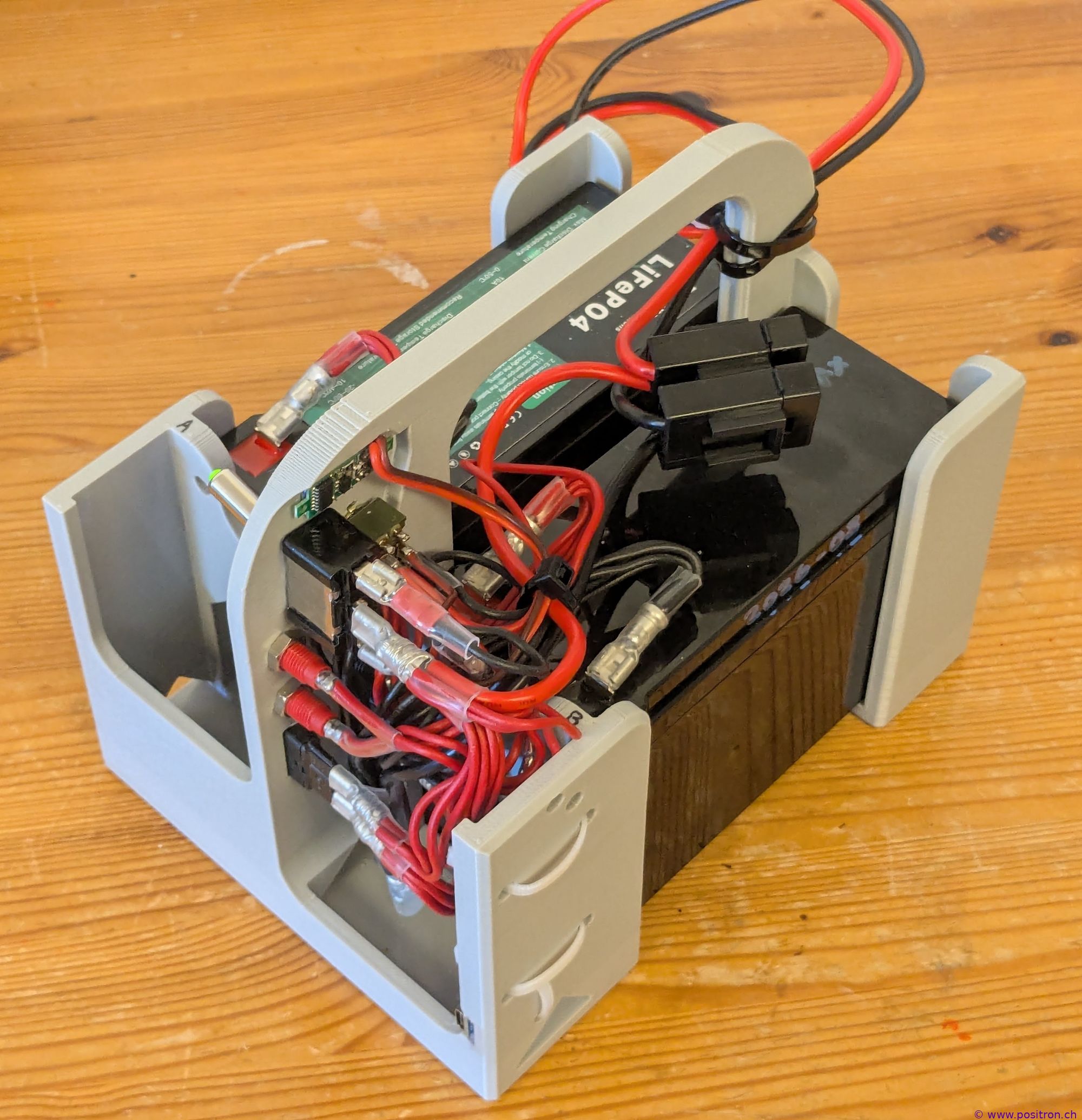
| I made a 3D print from PETG. It is airy and has many openings for cooling. | 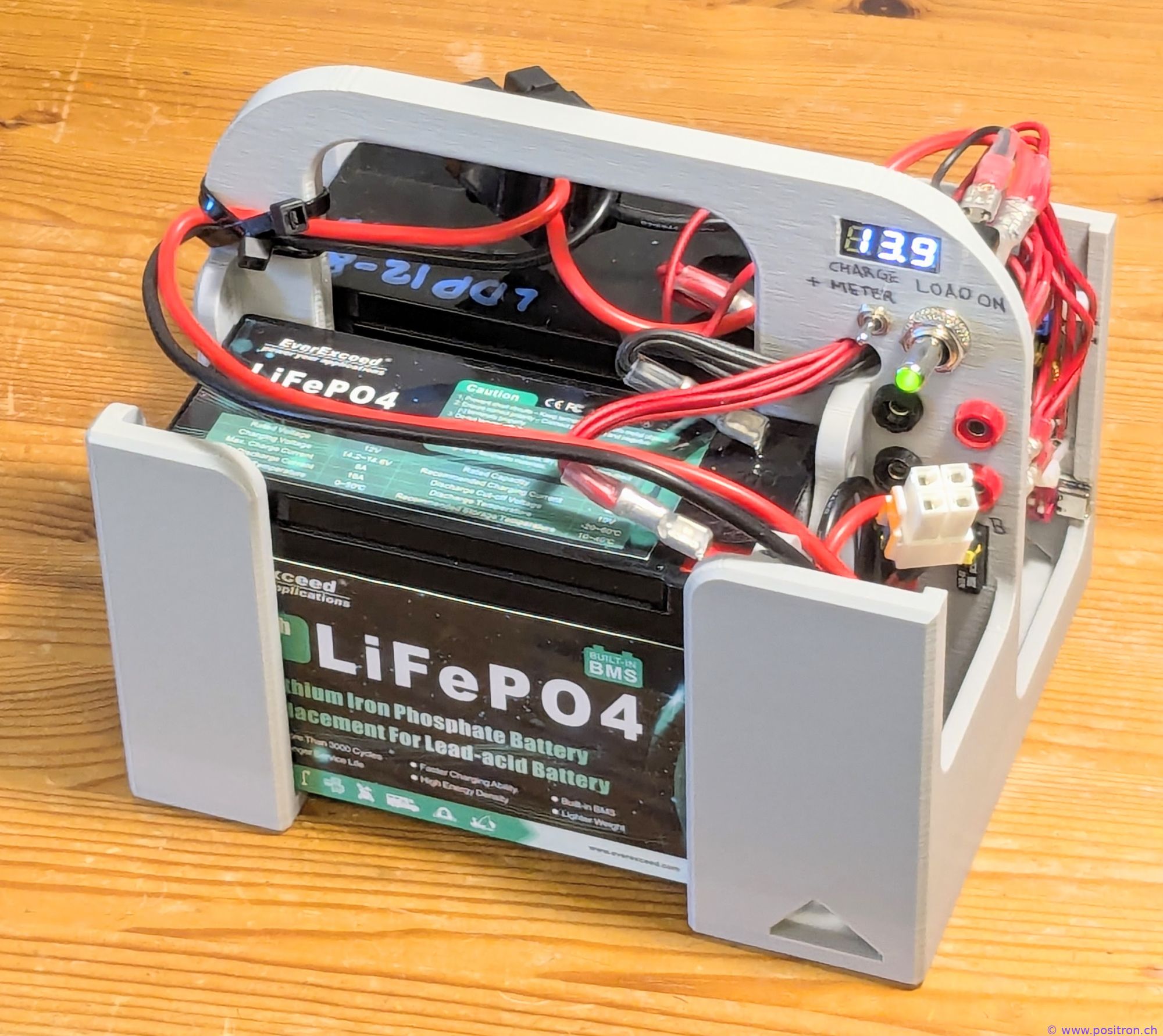 |
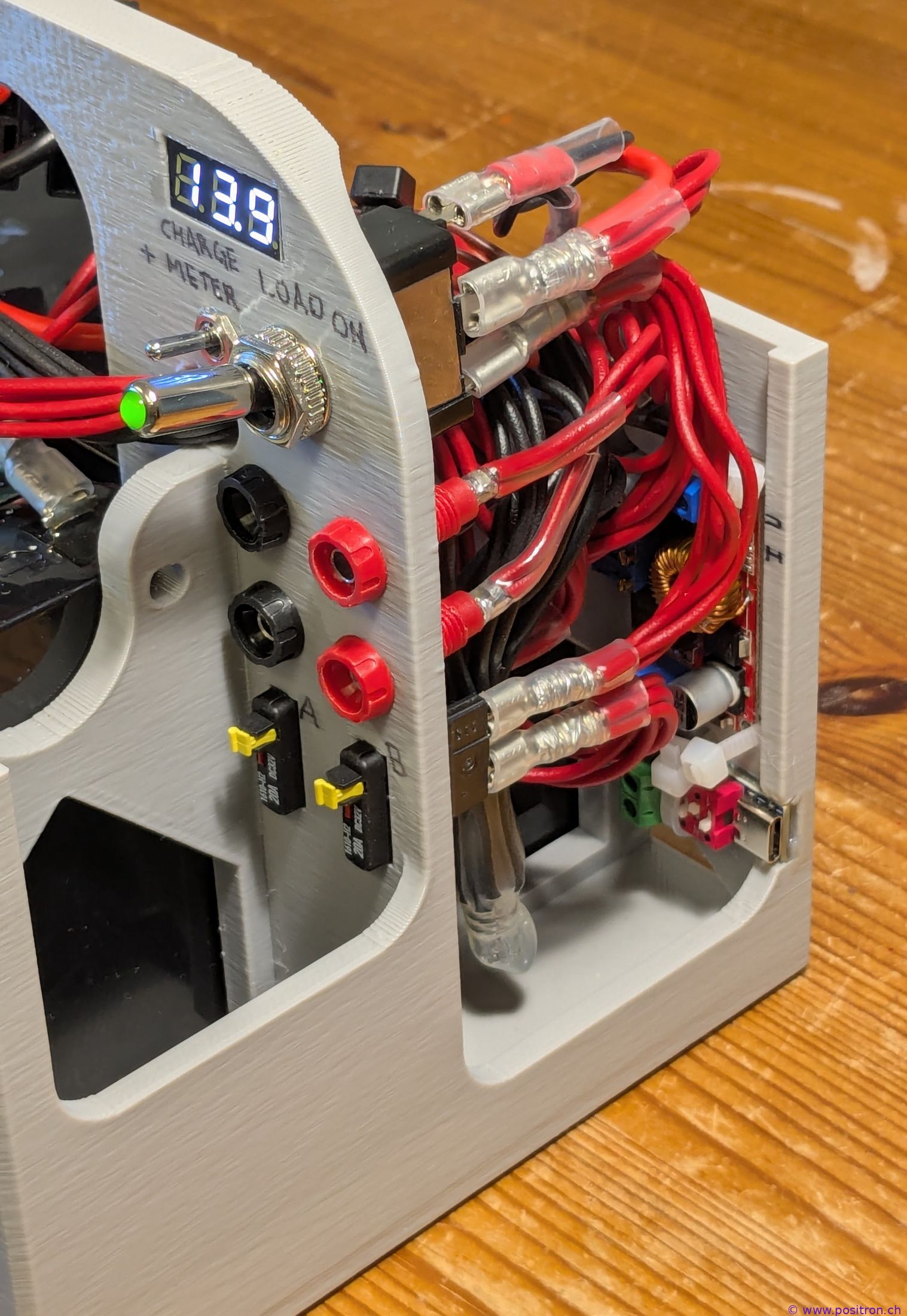
| Voltage display on top. | 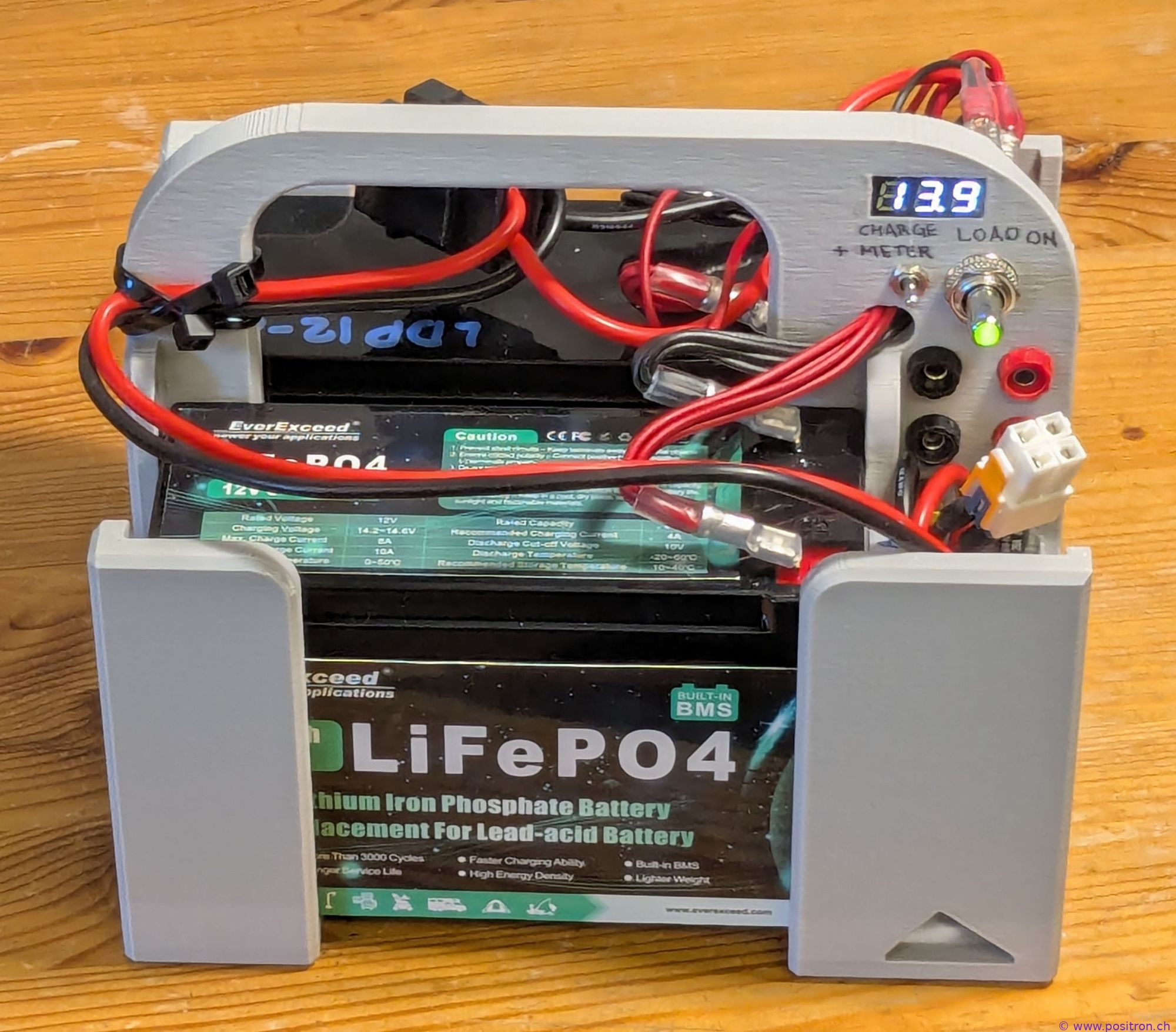 |
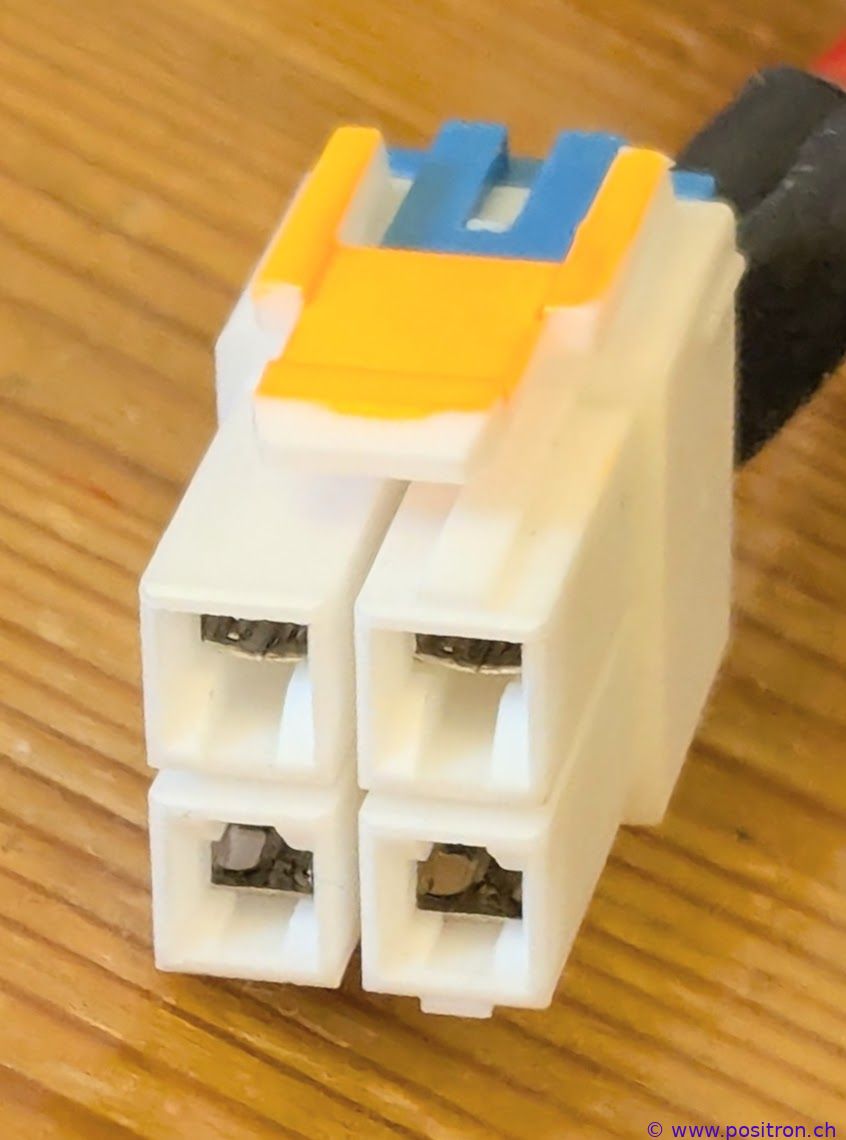
| A "4-pin Molex connector" for connecting radio equipment. | 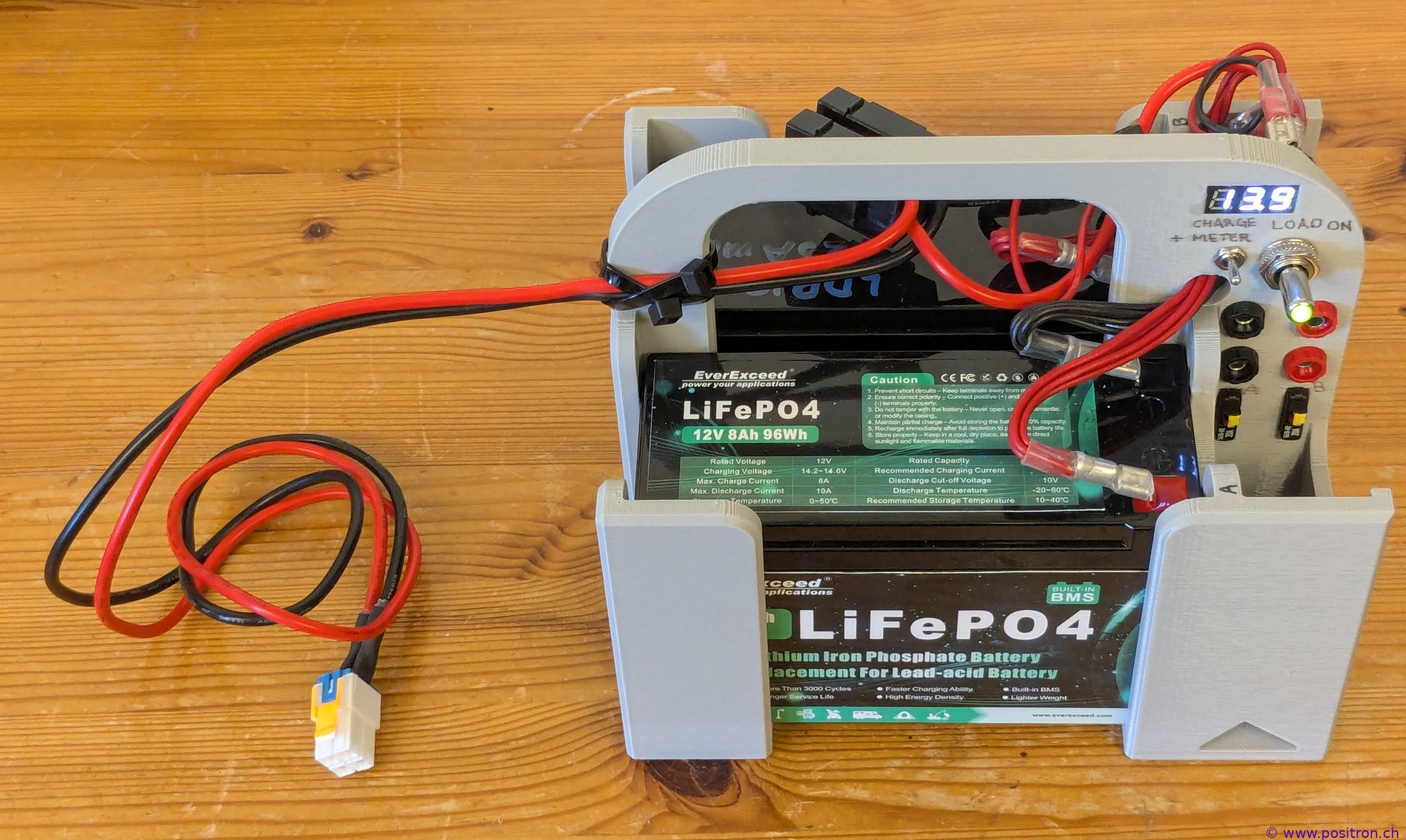 |
|
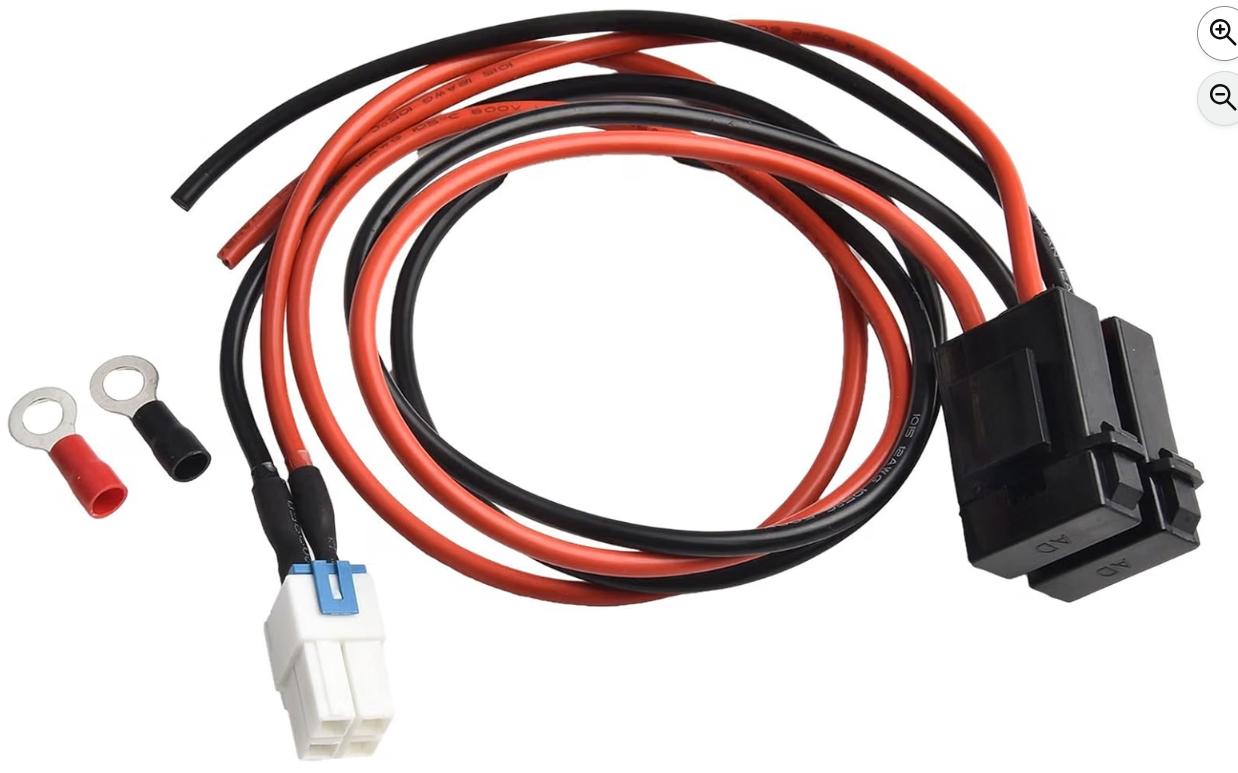
I received it as a cable kit from Amazon. The cable contains 30 A fuses. |
 |
|
"Molex" is probably the wrong designation, but it is widely used. Icom, Yaesu, Kenwood and Alinco? Wires: 4 x 12 AWG. |
 |
 |
|
|
It also has 4 mm banana sockets. |
 |
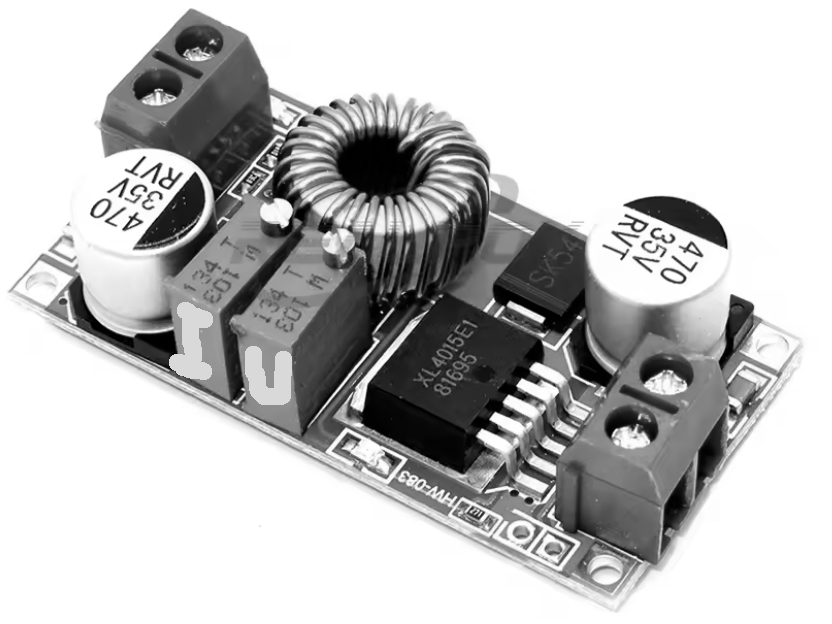
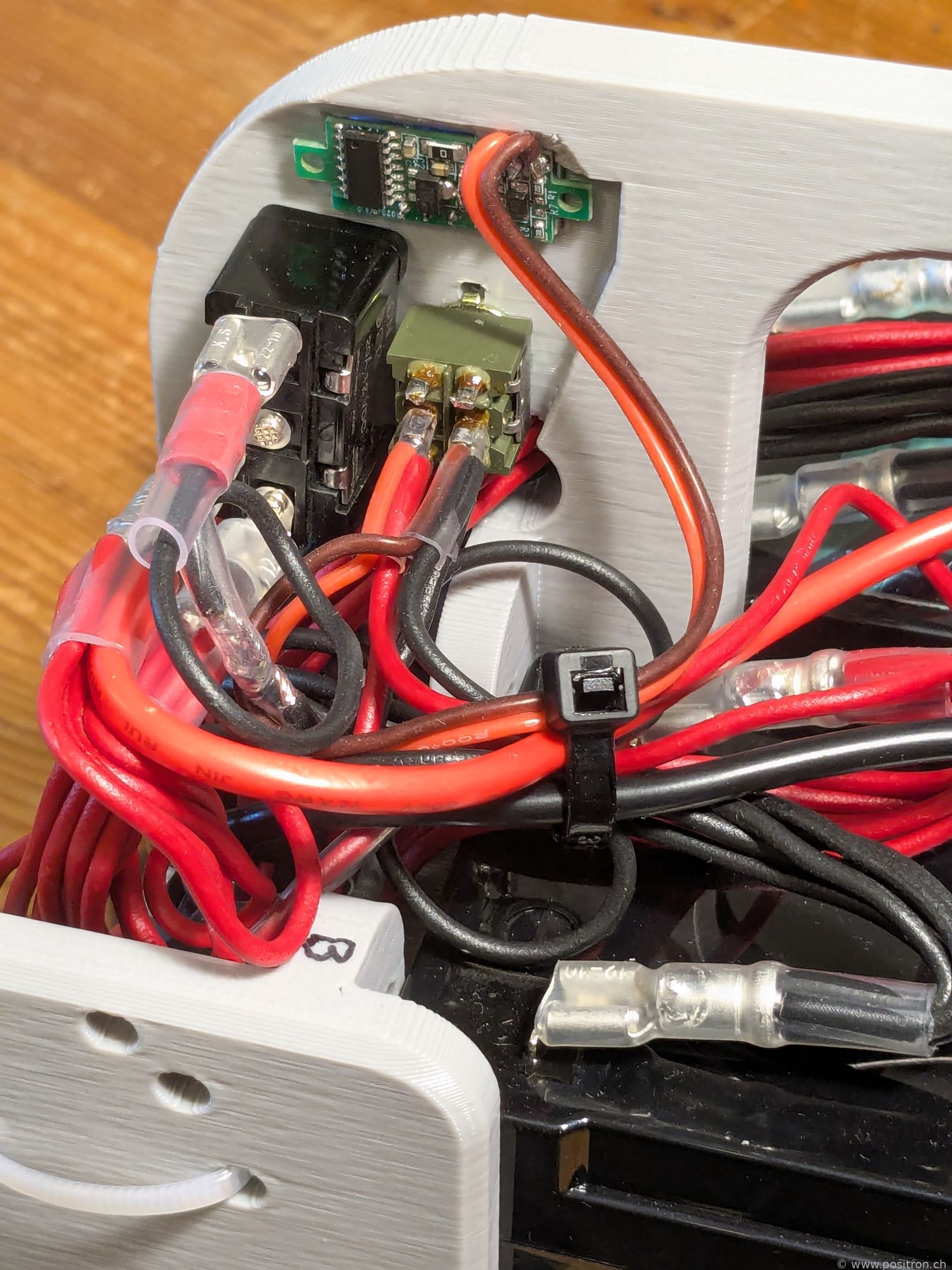
| Step-down converter and USB-C PD module from AliExpress. | 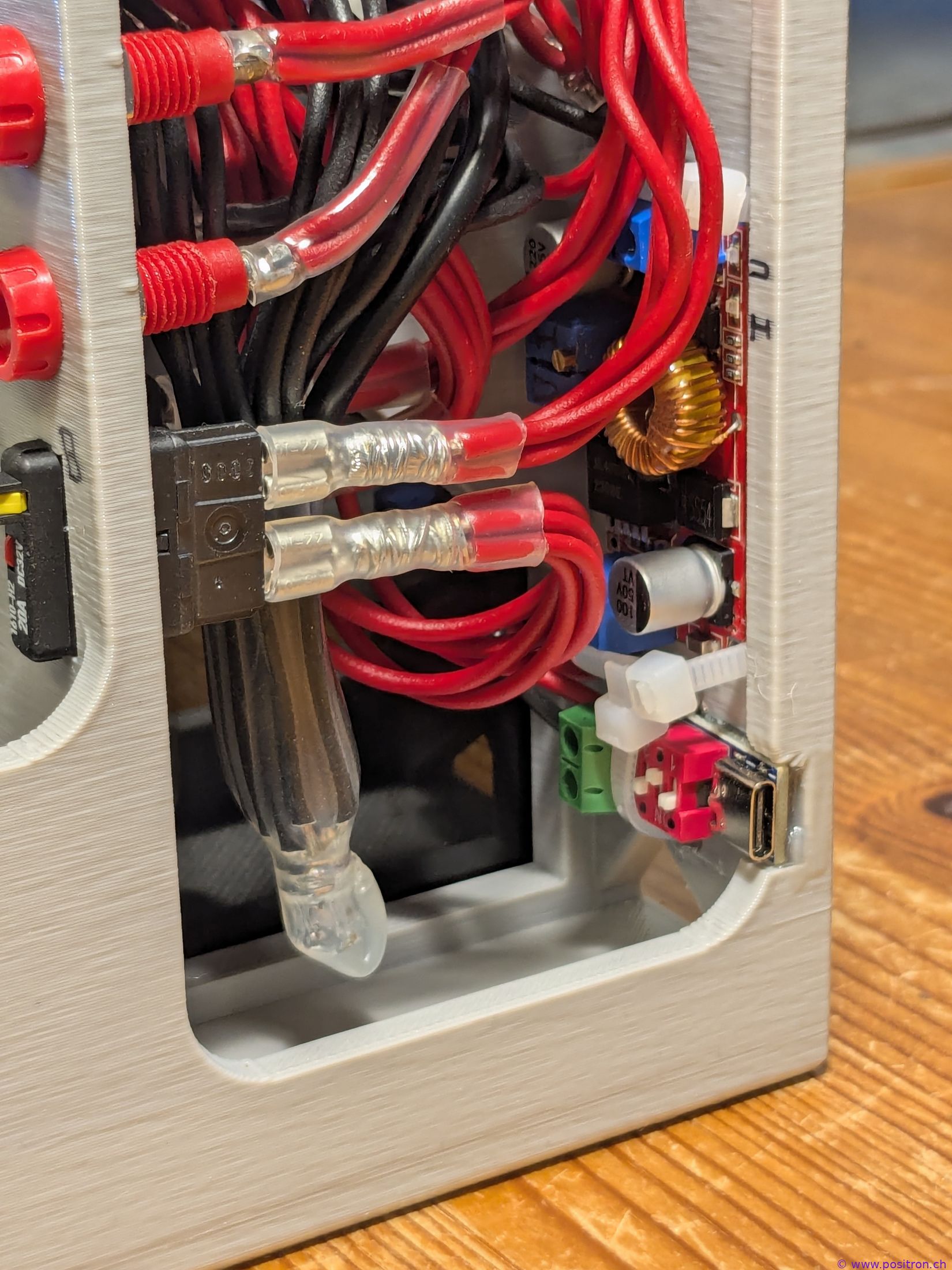 |
|
Converter module from AliExpress. Set at the output with the trimmer to 14.4 V and a 1 A limit. |
 |
| USB PD module set to 20 V. AliExpress. | 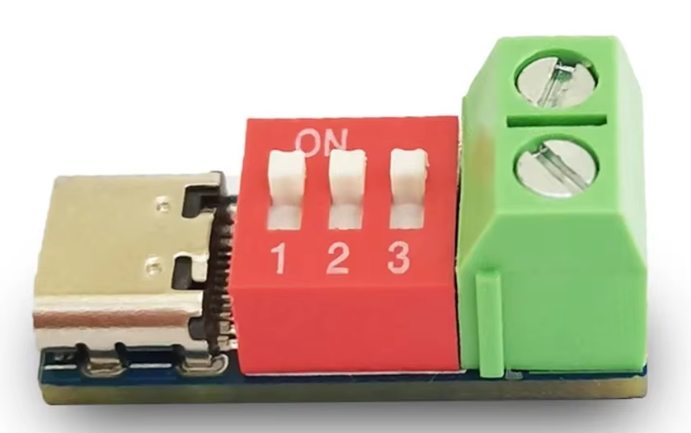 |
| Voltmeter from AliExpress. | 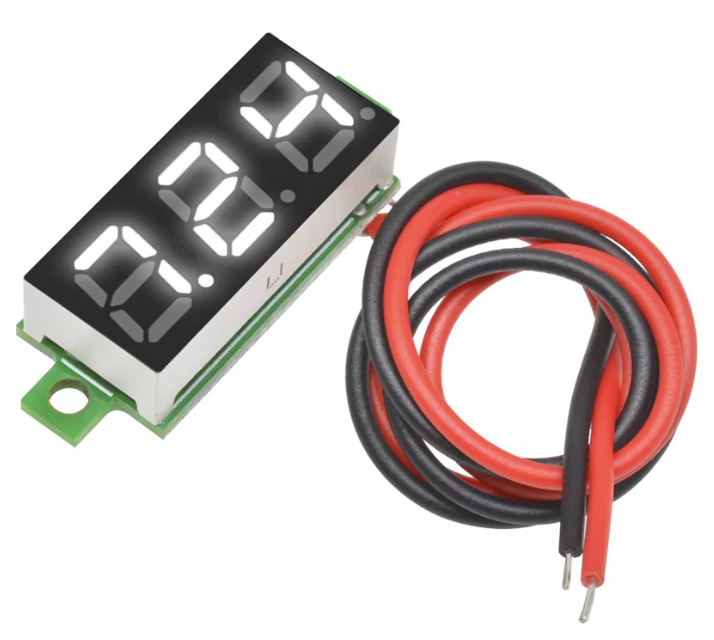 |
|
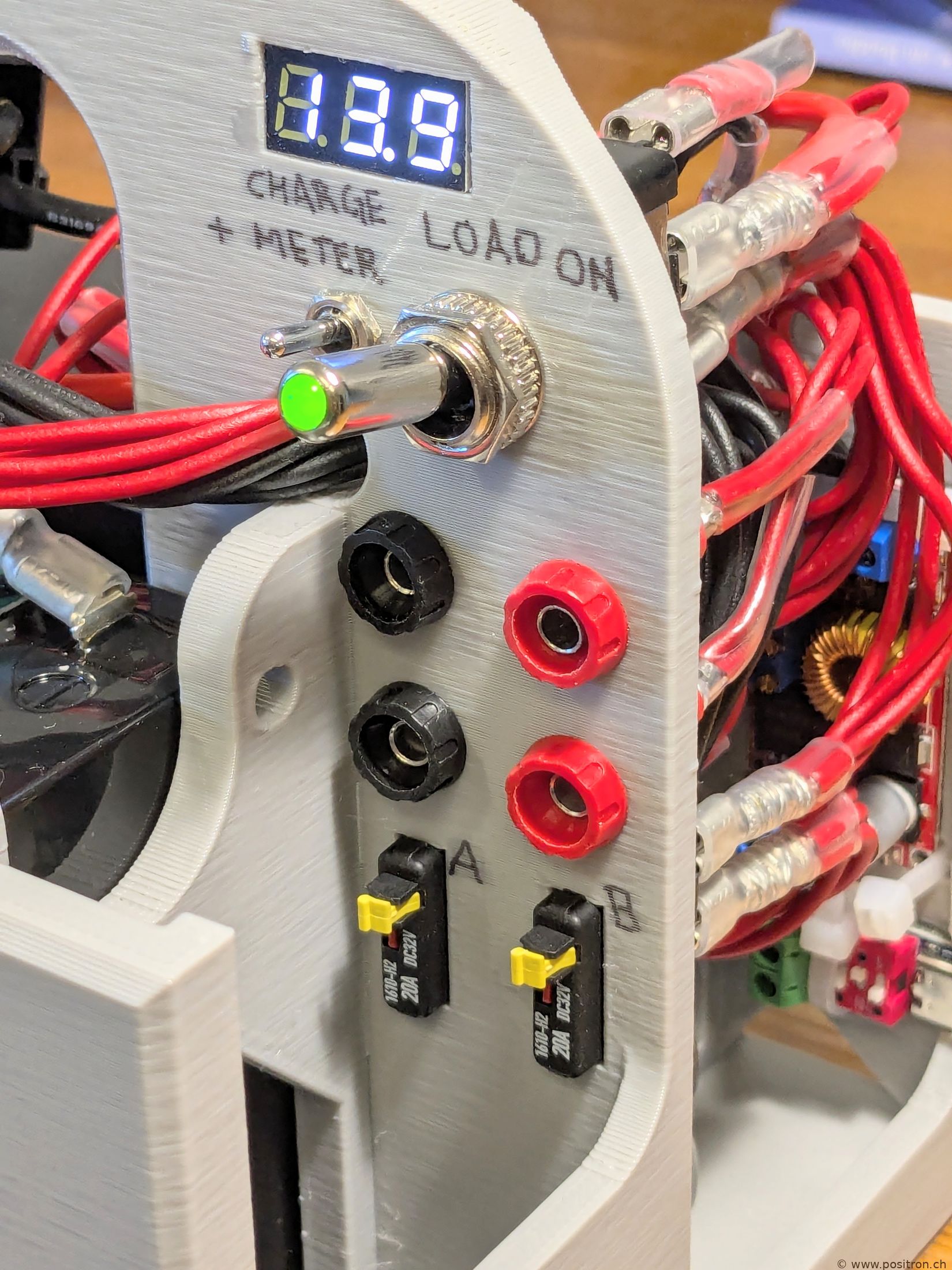
Each battery has a resettable 20 A fuse. This is important, for example, if the two batteries are connected together and they are at different charge levels. |
 |
 |
|
|
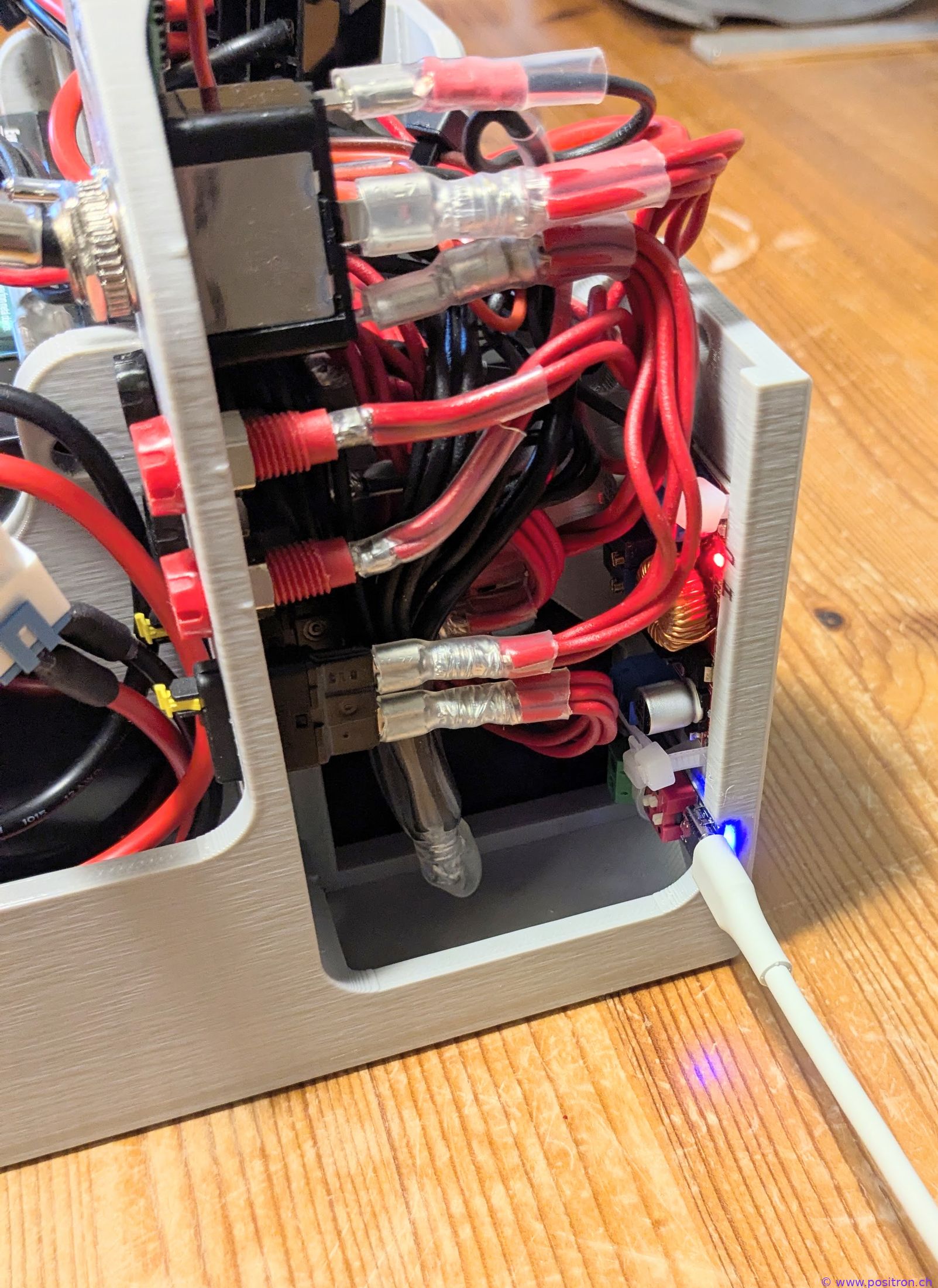
A real tangle of cables. I mainly used 0.75 mm² cable, with many in parallel. That makes it a bit unwieldy.
|
 |
| The battery can be charged with a small 20 W USB PD charger. Charging takes about 16 hours, but that is not important to me. | 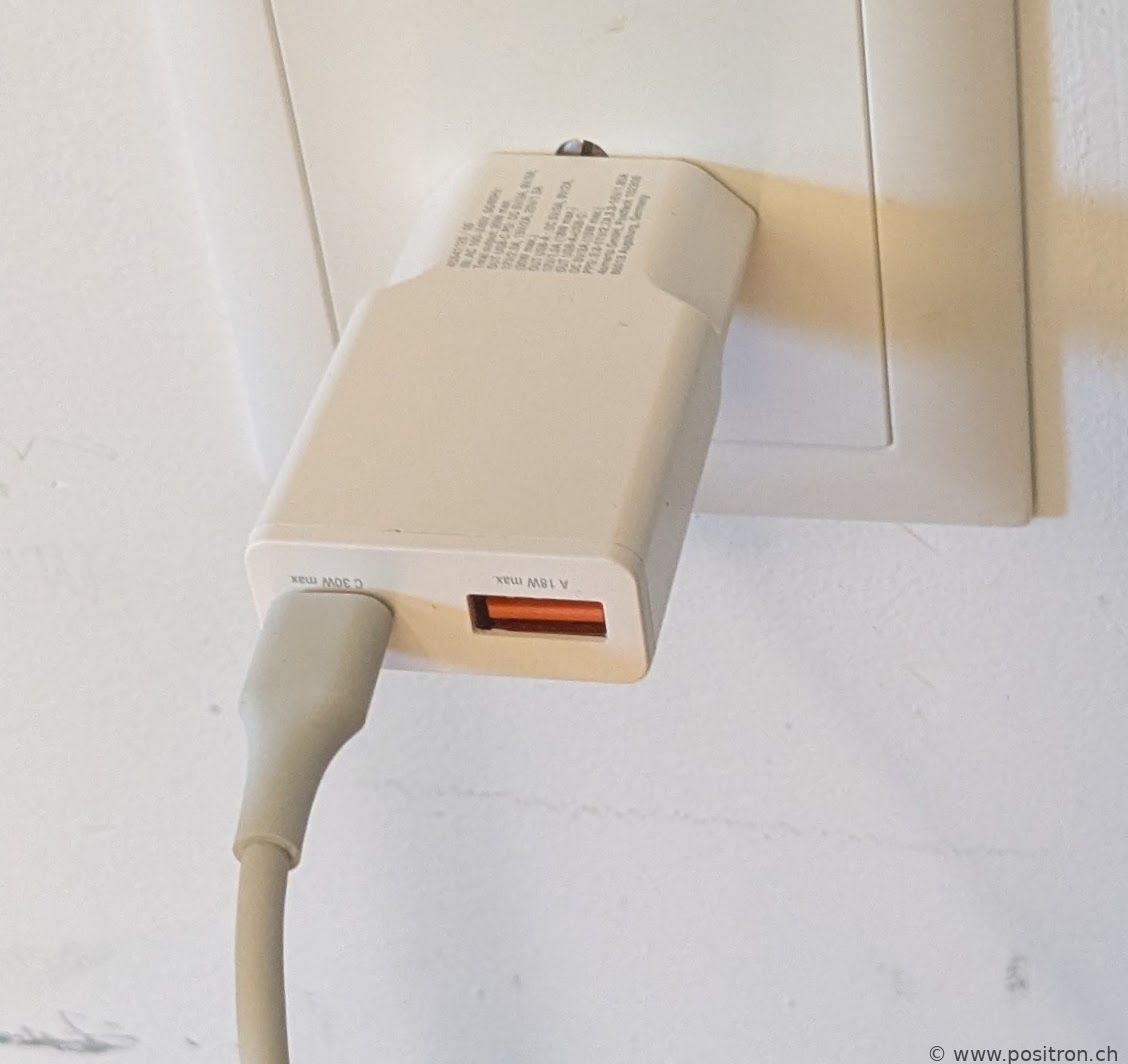 |
|
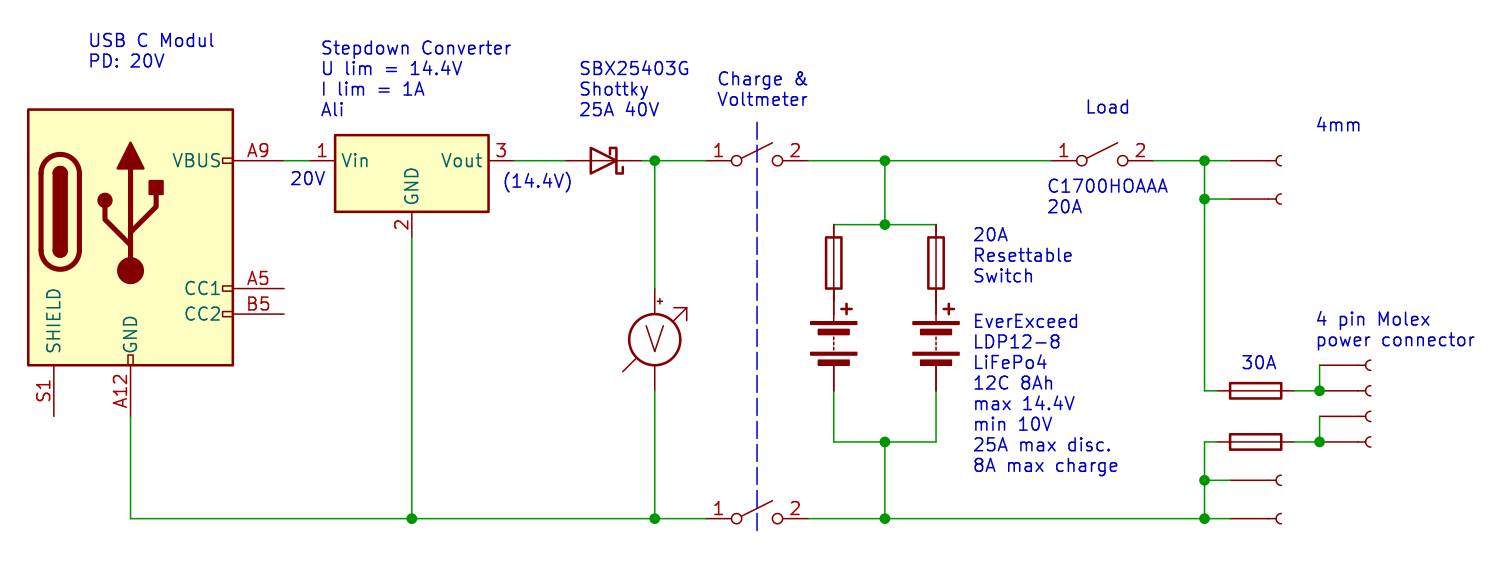
Schematic. |
 |
|
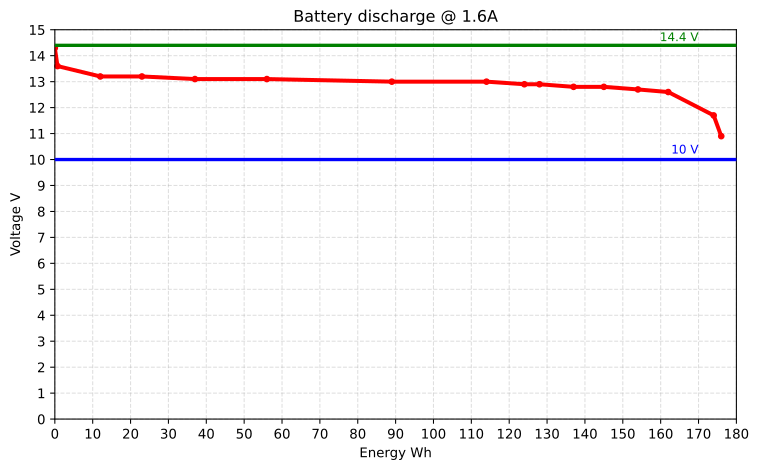
Discharge curve at a discharge current of 1.6 A. The curve is very flat. Because of the voltage, it is therefore hard to infer the remaining charge, but it is easy to see whether it is full or empty. This is the second discharge cycle. In the first one, the energy was only 127 Wh. Apparently, the capacity increases in the first cycles. The label on one battery says 97 Wh. Two batteries: 194Wh. It is actually surprising if the real result matches the printed value so closely. |
 |
Findings
A lot has happened in battery technology. As a child, I still tinkered with nickel-cadmium batteries, and today I can get such inexpensive, lightweight batteries with an integrated BMS that are simple and extremely practical. Wow.