Home
Antennas
Various
Attenuators
Broadband chokes big
Broadband choke simple
> CW straight key selfmade
CW trainer
FT-991A output power
FT-991A cw envelope
Meter Nissei DG-503
Resistive Bridge
VNA to measure loop antenna
Insulation Tester 6688B
Linear Supply PT110A
LiFePo4 Battery Pack
Power Meter AD8307
Impressum
Sitemap
Printable version
Homemade straight key, circa 1990
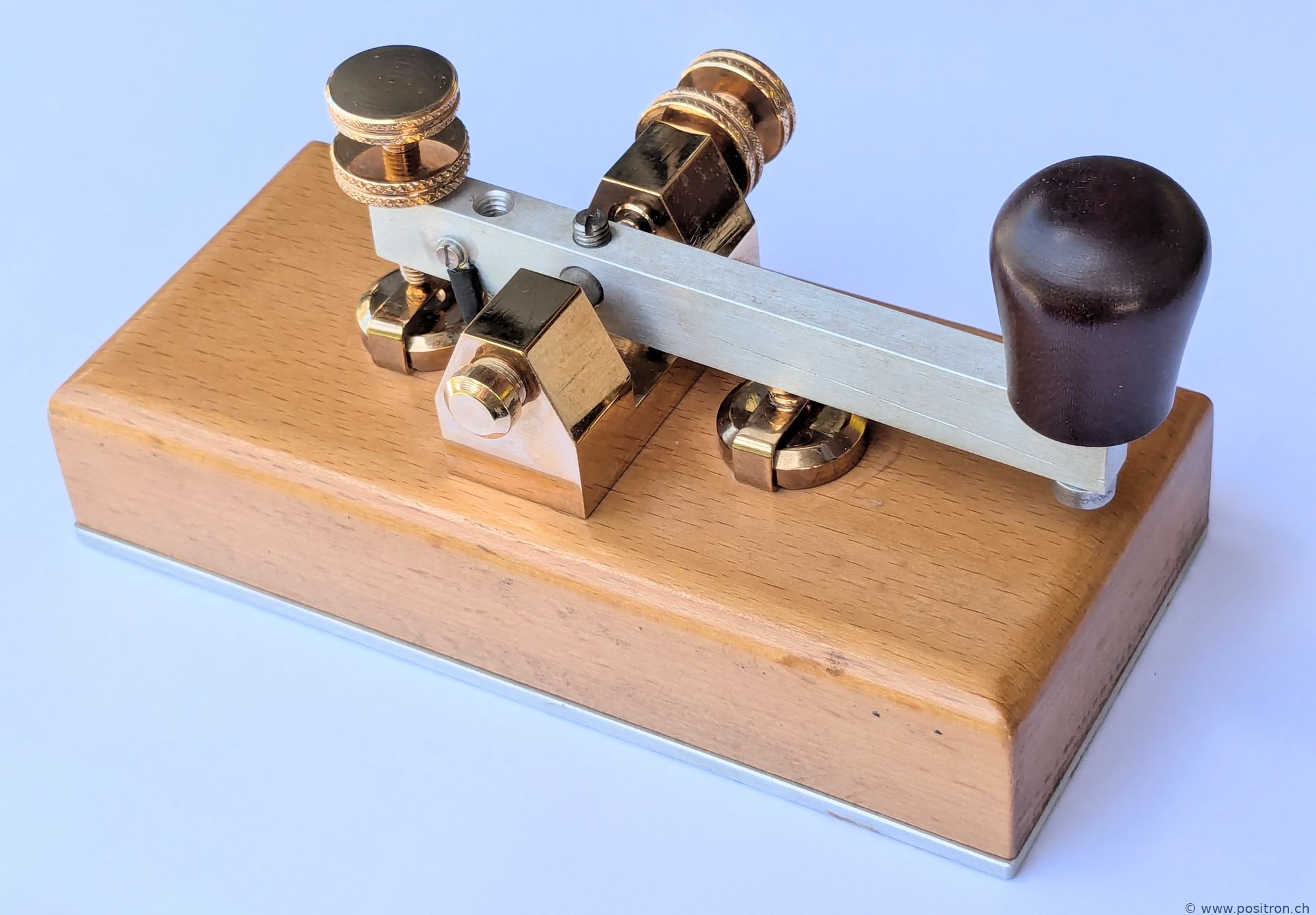
I completed an apprenticeship as a physics laboratory technician. In the first of the four years we did a lot of mechanical work: turning, milling, etc. I was fascinated by radio and in my spare time, using the machines at my training company, I built a Morse key — probably in 1990.
How exactly I came up with this design I no longer know. I suspect it was through an illustration in a magazine or a visit to a museum.
In 2026 I found illustrations of an “Übungsmorsetaste” (practice Morse key), Zellweger AG, Uster, Swiss Army. It is very similar to the key I built.
|
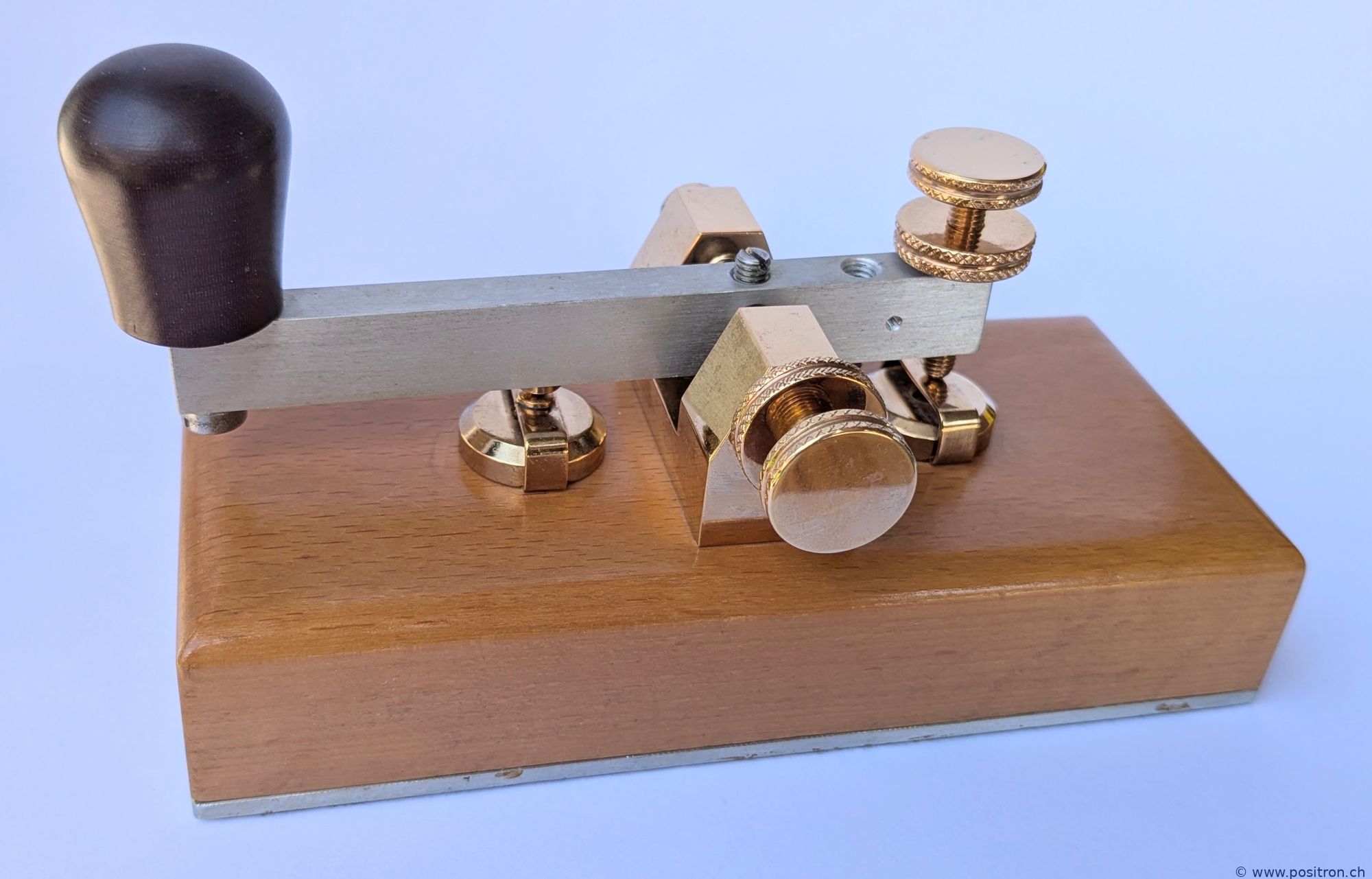
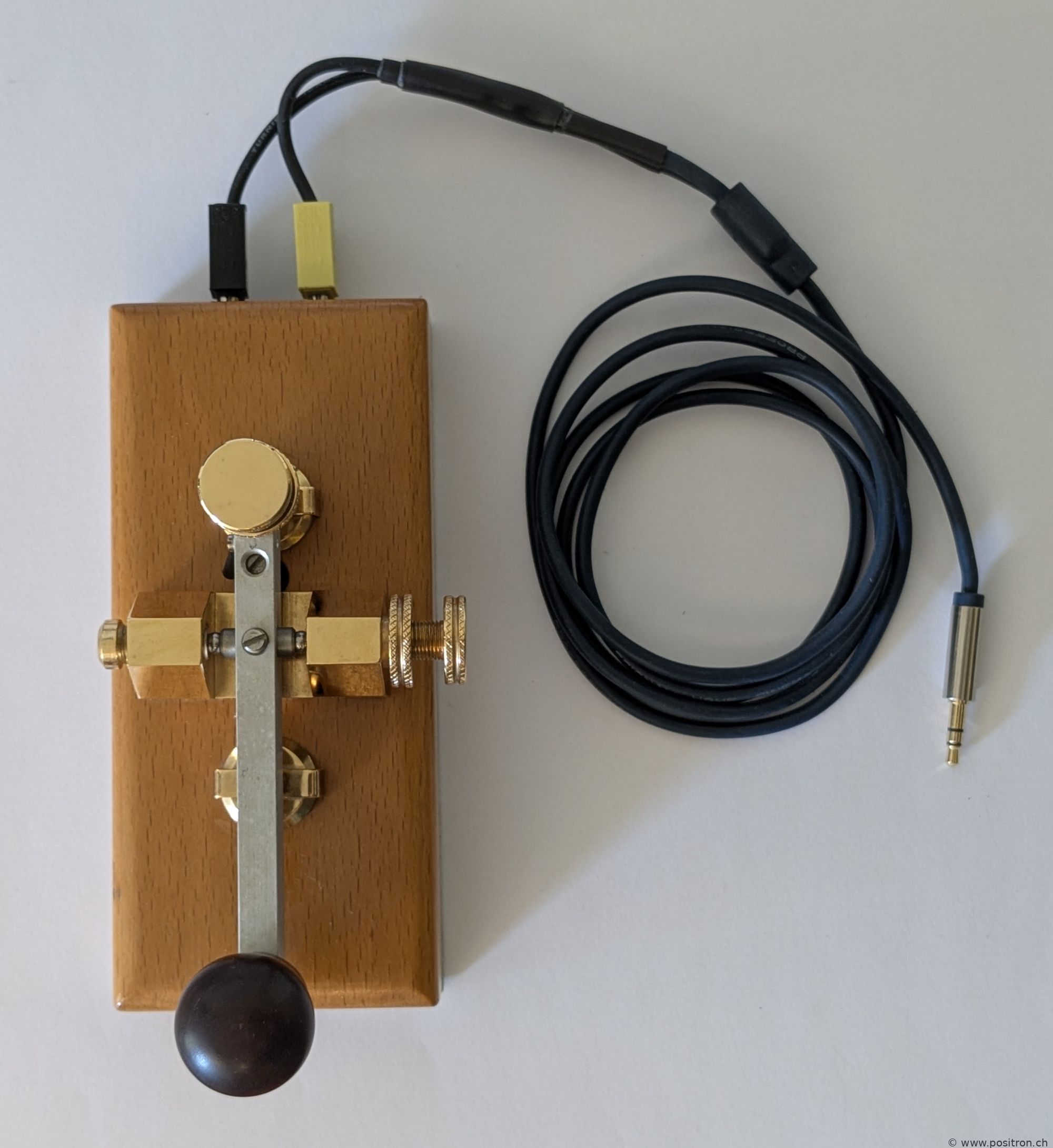
Wood: beech from a bed frame: 150 mm × 70 mm. |
 |
 |
|
|
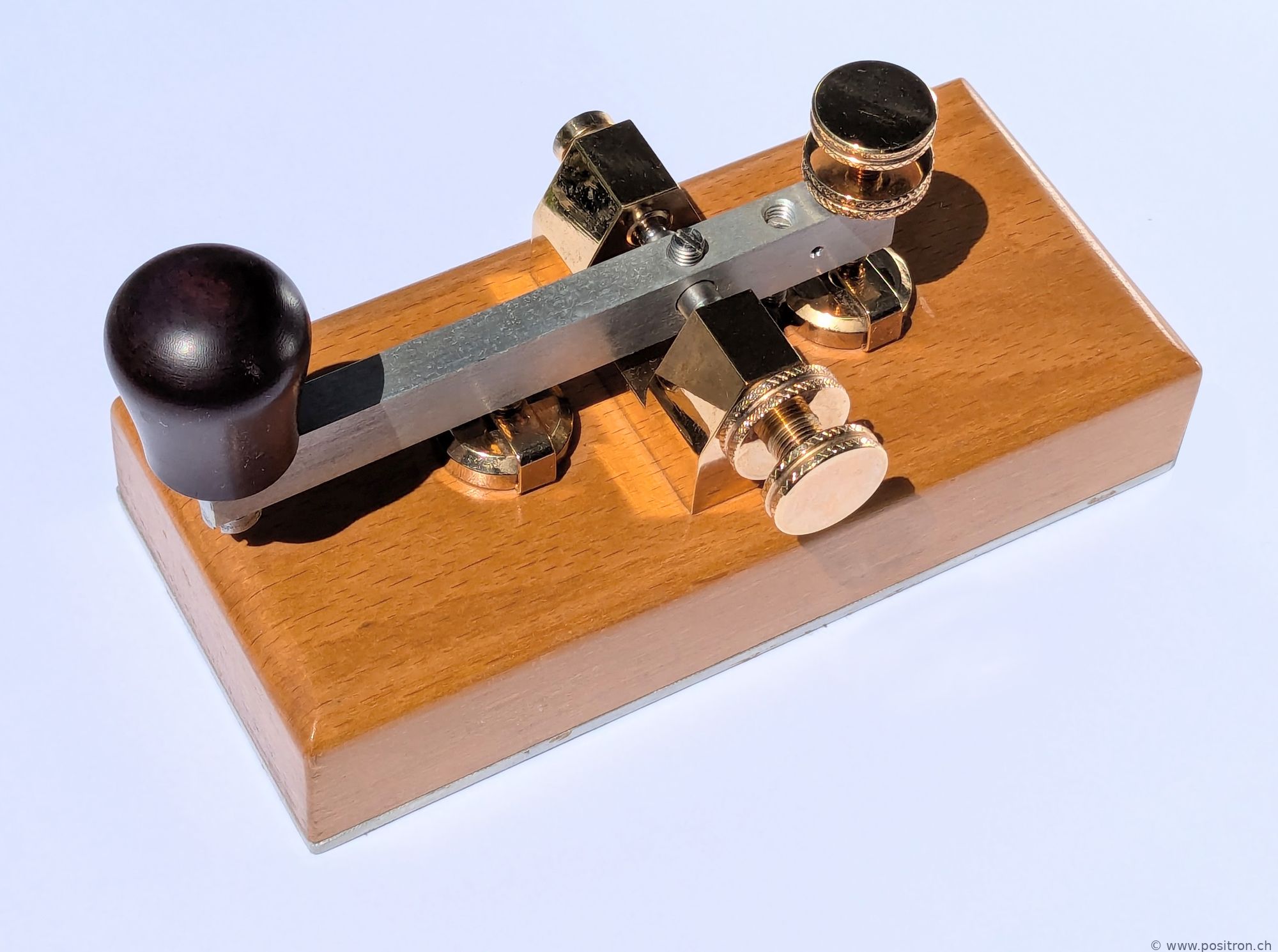
Total weight 720 g — quite substantial. |
 |
|
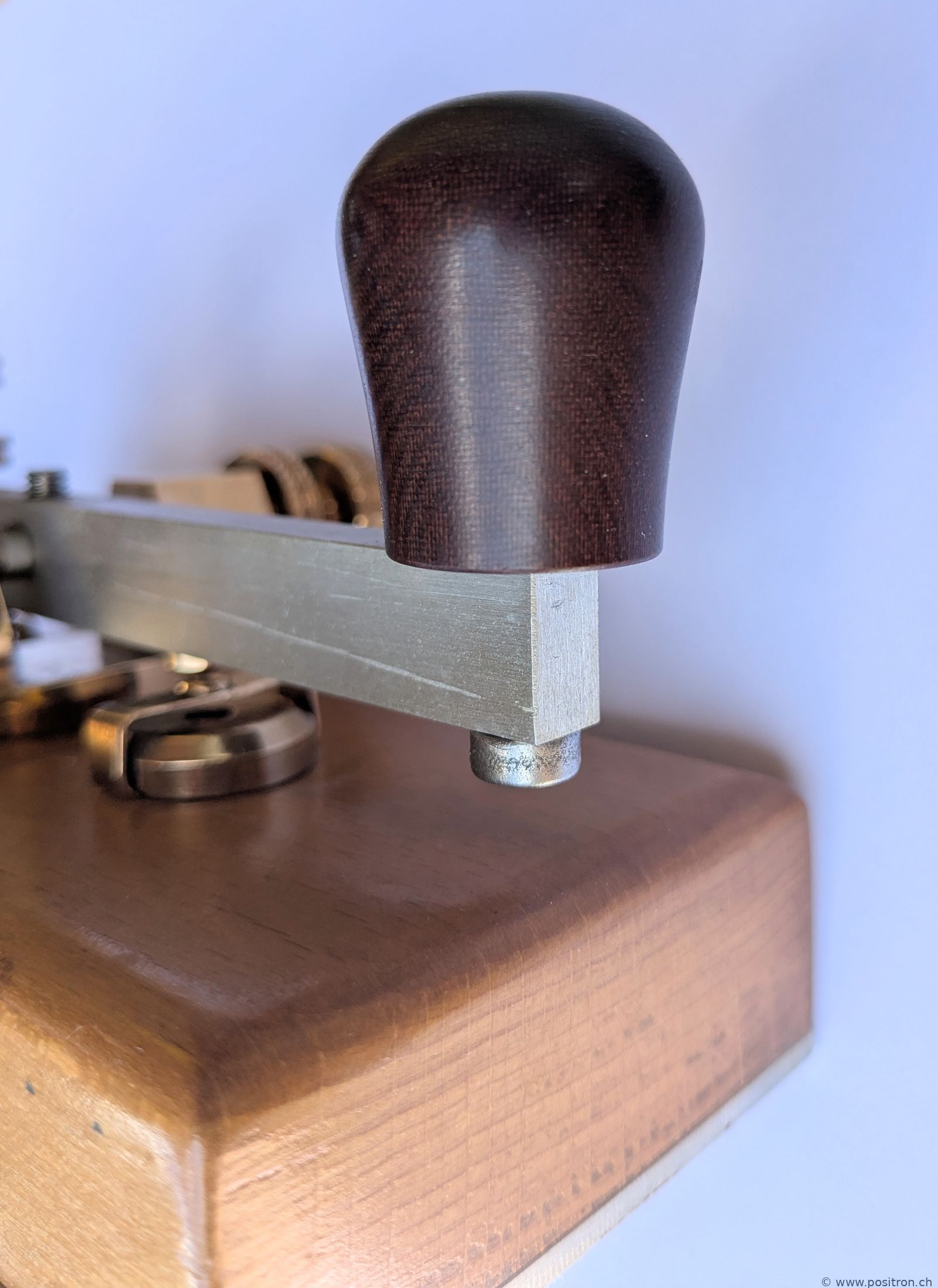
Knob: cotton fabric reinforced phenolic resin. It smells strongly when turned on the lathe. |
 |
|
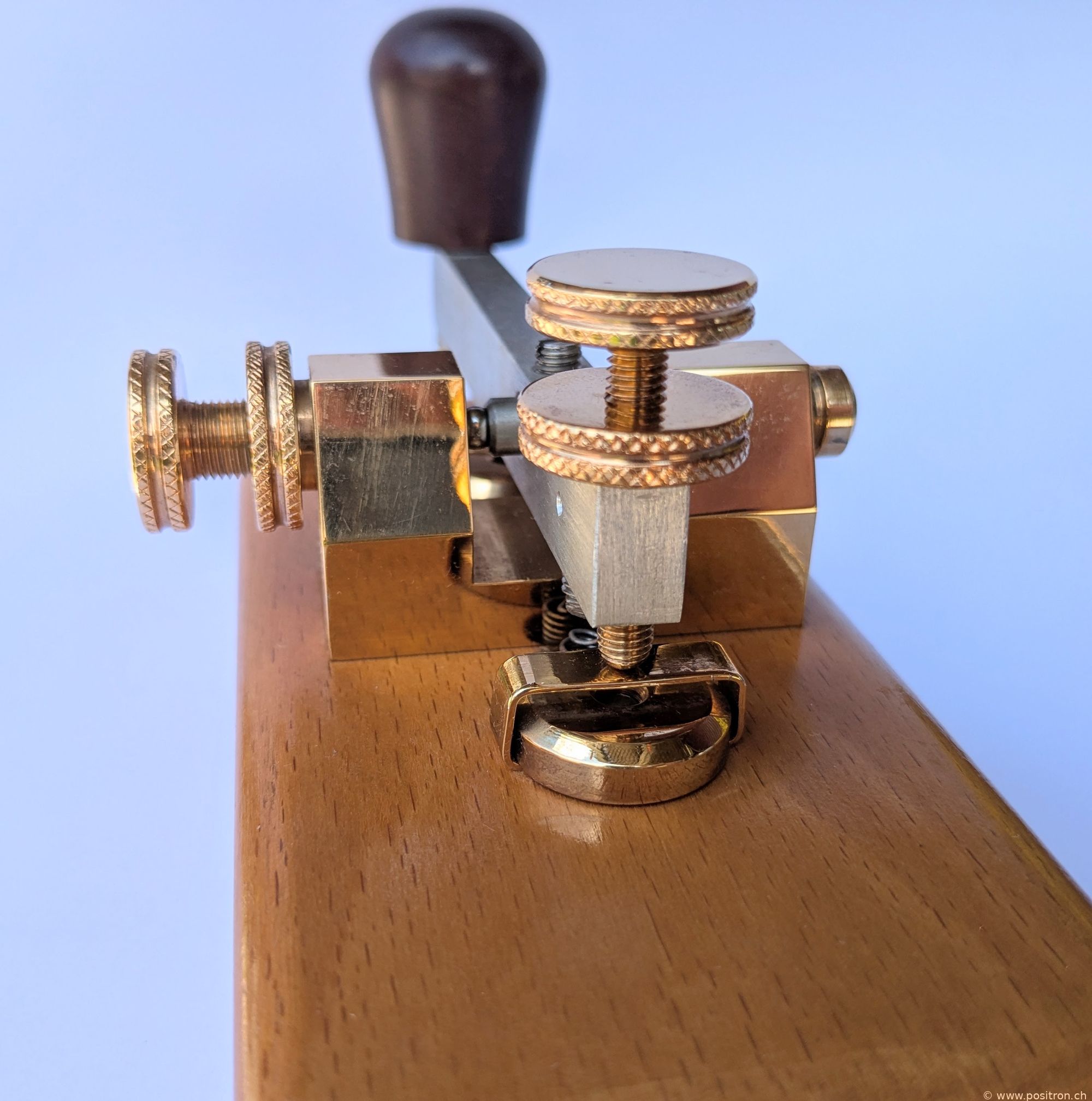
Parts made of brass, from brass offcuts I could get for free. The brass parts were nickel-plated and then gold-plated by the company “Werner Flühmann AG, Galvanik mit Edelmetallen, Dübendorf”. As far as I know, this company no longer exists. That was very expensive for me at the time. After gold-plating, the M8 fine thread and all the other threads seized and I had to re-cut them. They probably applied the coating far too thick. |
 |
|
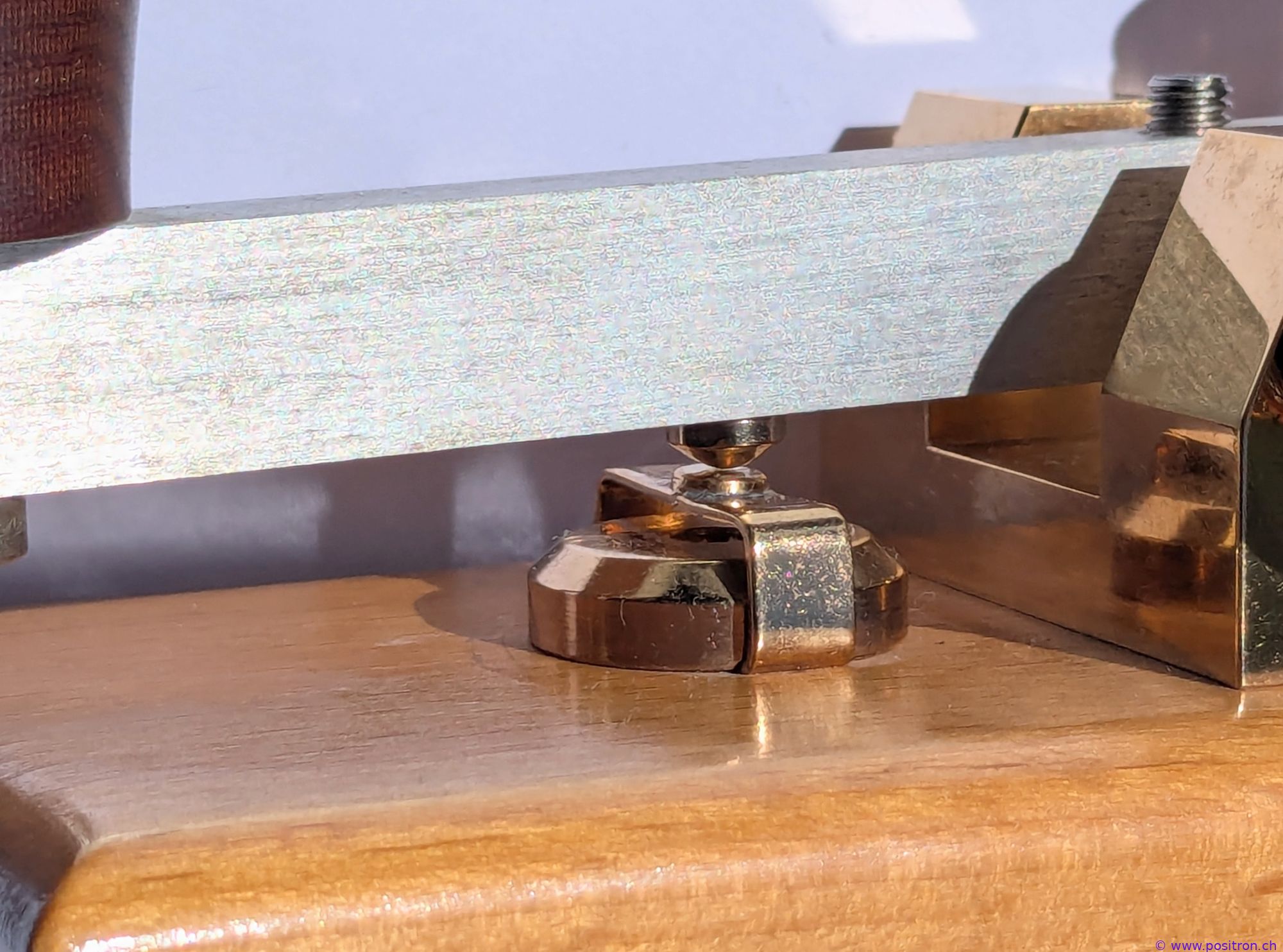
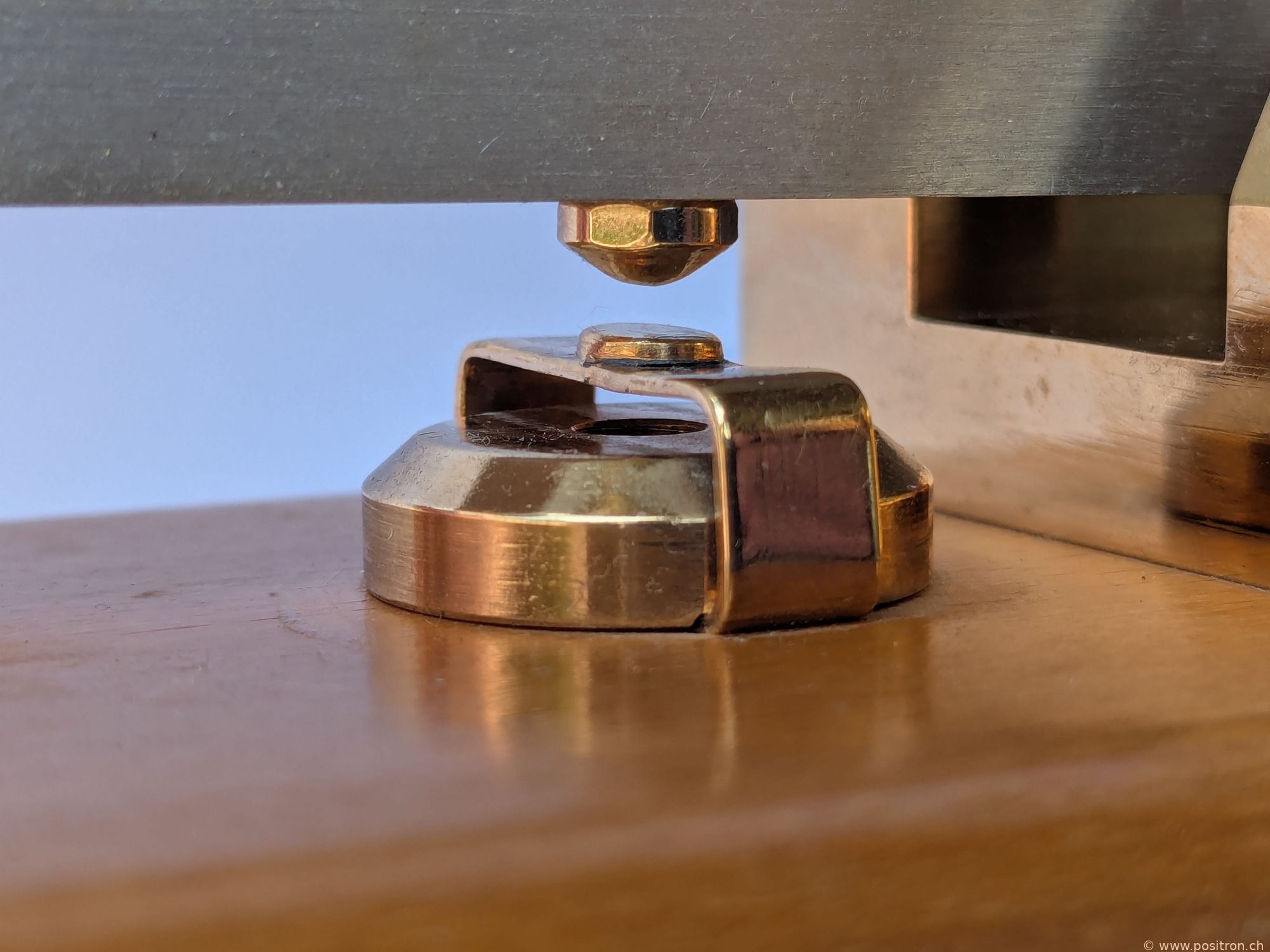
Lever: aluminium. Contacts: taken from a heavy-duty 220 V relay, full silver, then gold-plated together with the brass parts. |
 |
|
The gap was set extra wide for the photo so that the contacts are clearly visible. |
 |
|
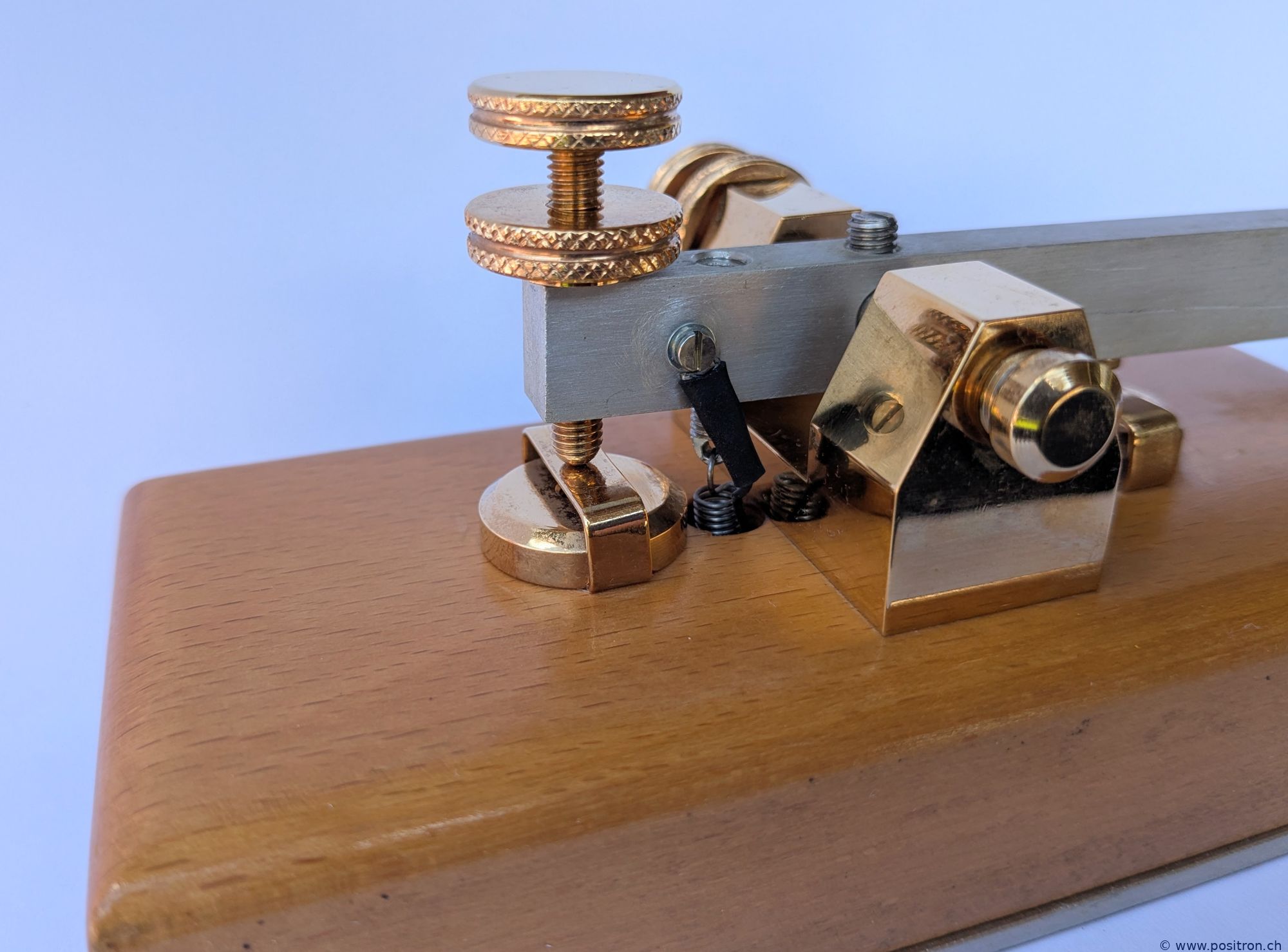
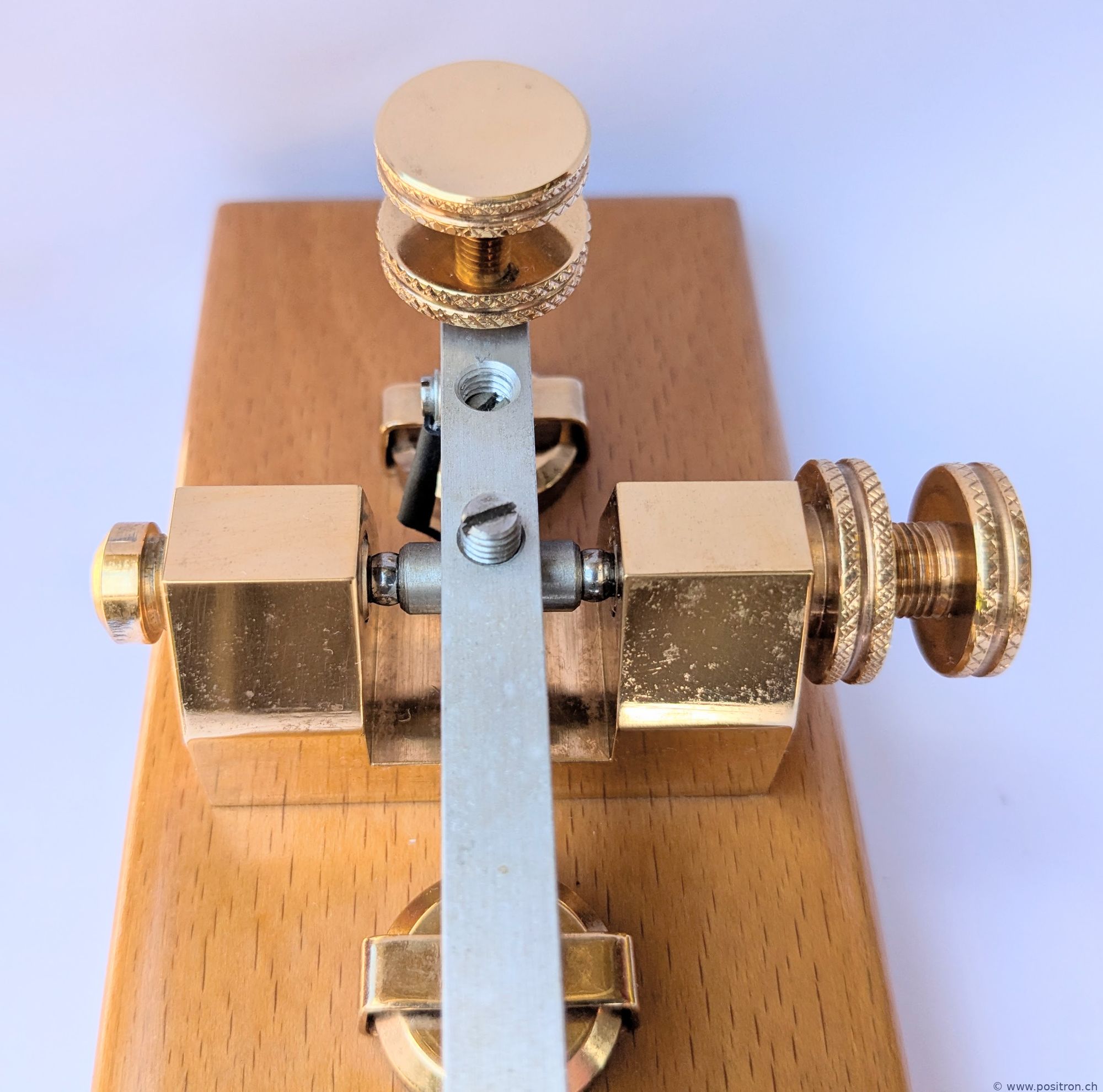
In 2026 I added the black wire to ensure the lever has a reliable connection to ground (M2 screw, thick heat-shrink tubing and fine silicone wire routed through the same hole as the spring). The contact via the side steel balls felt too unreliable to me. |
 |
|
Back then, this was the pinnacle of my mechanical understanding — two polished balls as bearings. One could call it a ball bearing, but it is not one in the sense that the balls actually roll. Today I would use small precision ball bearings. Bearings that small either did not exist back then or were very expensive. |
 |
|
Luckily I still had some old audio cables lying around that I could reuse for the Morse key. |
 |
|
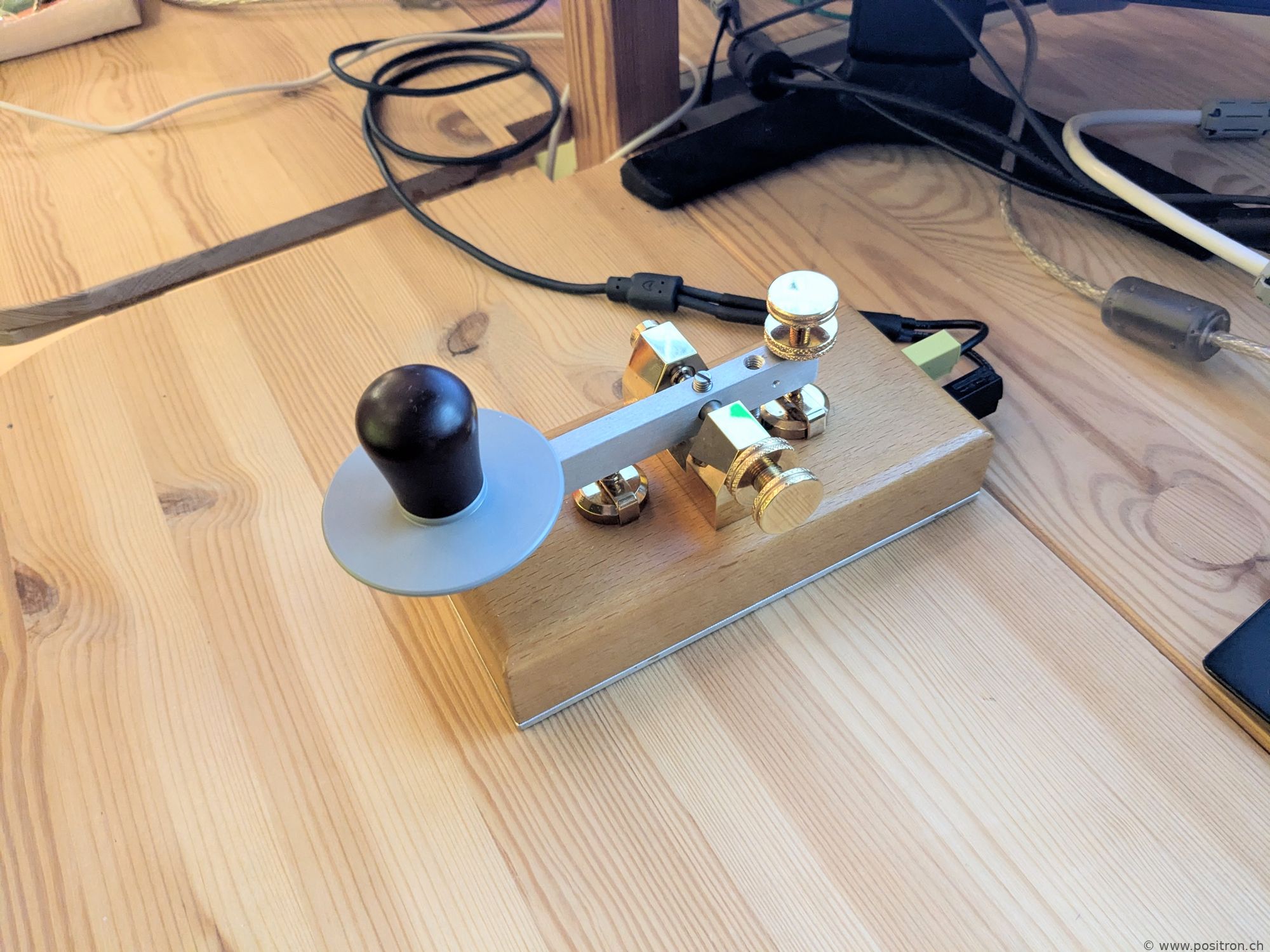
Below the knob I also made a disc, so the hand tires less. |
 |
In 2026 I retrieved the key from the basement. Inside, the counterweights made from brass offcuts had come loose — the adhesive from back then had let go. I cleaned and polished the surfaces, which were dusty and probably contaminated with spray-paint residue. With an M2 screw and a wire I secured the electrical contact from the aluminium lever. And soon the time will come when I can put this key into operation for the very first time after more than 35 years.
Back in 1990 I could never have dreamed that I would one day simply browse the internet and order a key. That the price would hardly matter to me. That I might hold an amateur radio licence and be able to plug this key into a modern transceiver. That artificial intelligence would help me fix syntax errors in the HTML code of this web page.