Home
Antennas
Various
Attenuators
Broadband chokes big
Broadband choke simple
CW straight key selfmade
CW trainer
> FT-991A output power
FT-991A cw envelope
Meter Nissei DG-503
Resistive Bridge
VNA to measure loop antenna
Insulation Tester 6688B
Linear Supply PT110A
LiFePo4 Battery Pack
Power Meter AD8307
Impressum
Sitemap
Printable version
Measuring the RF output power of an FT-991A
I bought an FT-991A transceiver and measured the output power.
Bought in Switzerland in November 2025, SN 4F910844, Europa Version
I updated the firmware of the FT-991A:
- Main: V02-04 → V02-07
- DSP: V01-12 (unchanged)
- TFT: V02-00 (unchanged)
- C4FM: V04-15 (unchanged)
Based on my own measurements and datasheets, I estimate the error of these components as follows:
| Component | Error |
|---|---|
| Attenuator 30 dB | ± 0.3 dB |
| Attenuator 20 dB | ± 0.4 dB |
| Power meter A with AD8307 up to 30 MHz | ± 0.5 dB |
| Power meter B above 50 MHz | ± 1 dB, not checked |
| attenuator 30 dB, 100 watt | 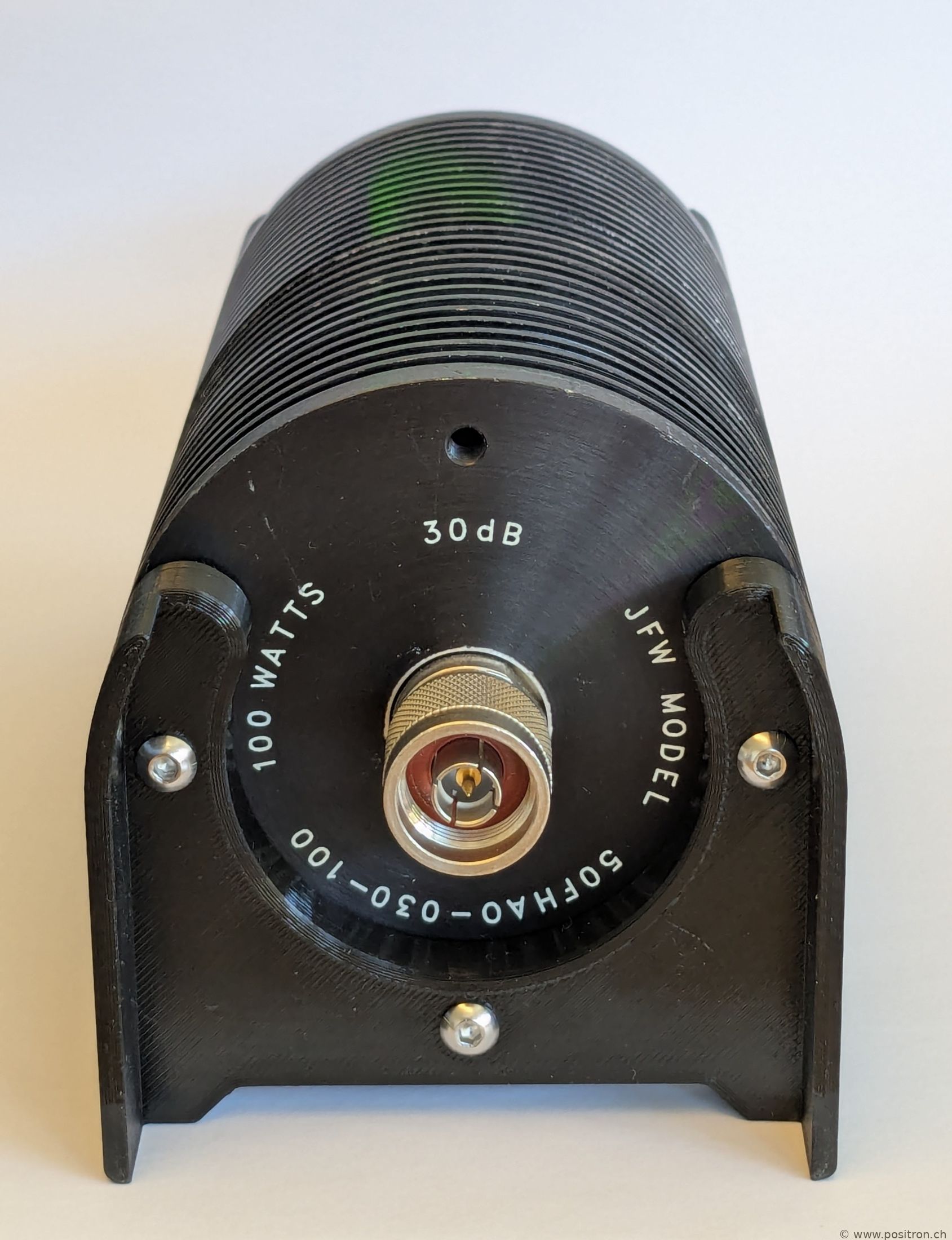 |
| attenuator 20 dB | 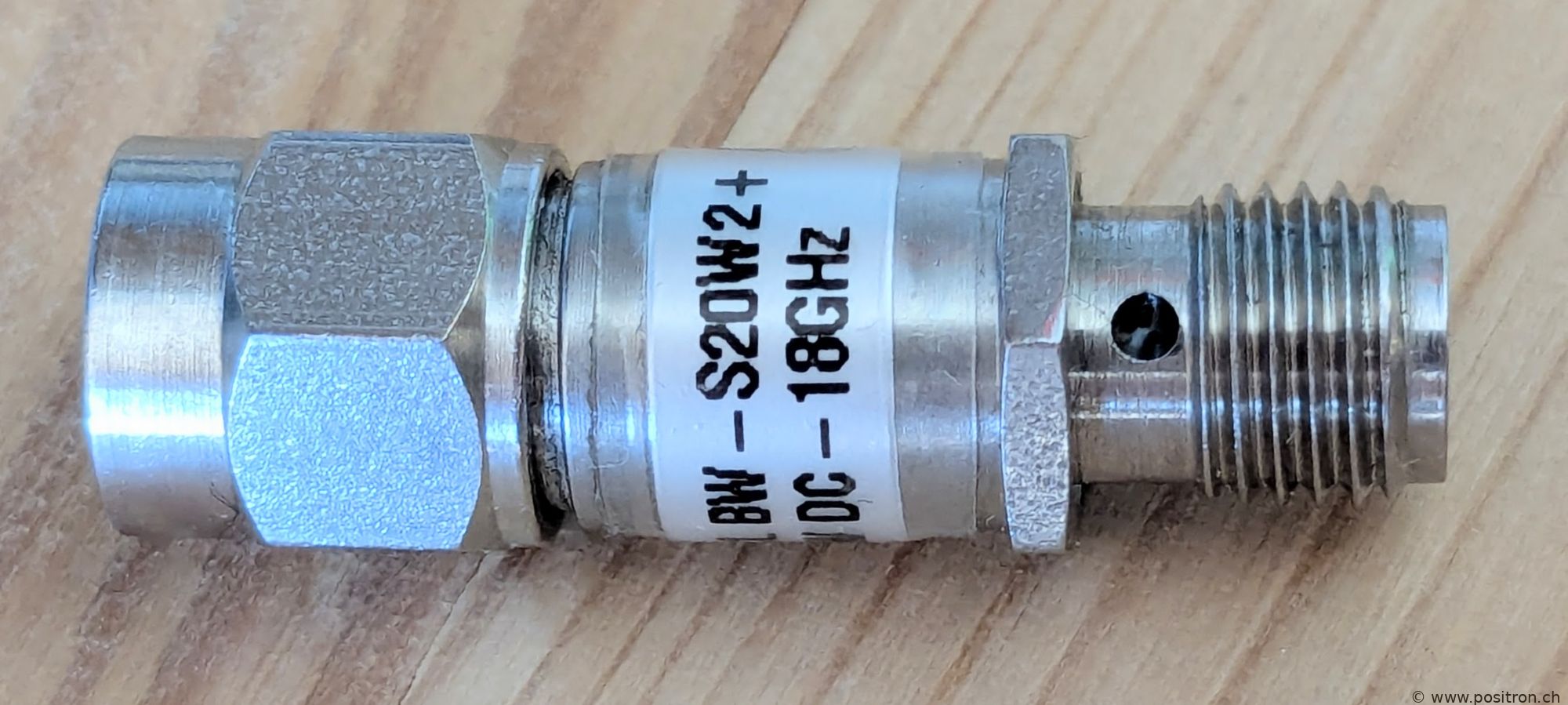 |
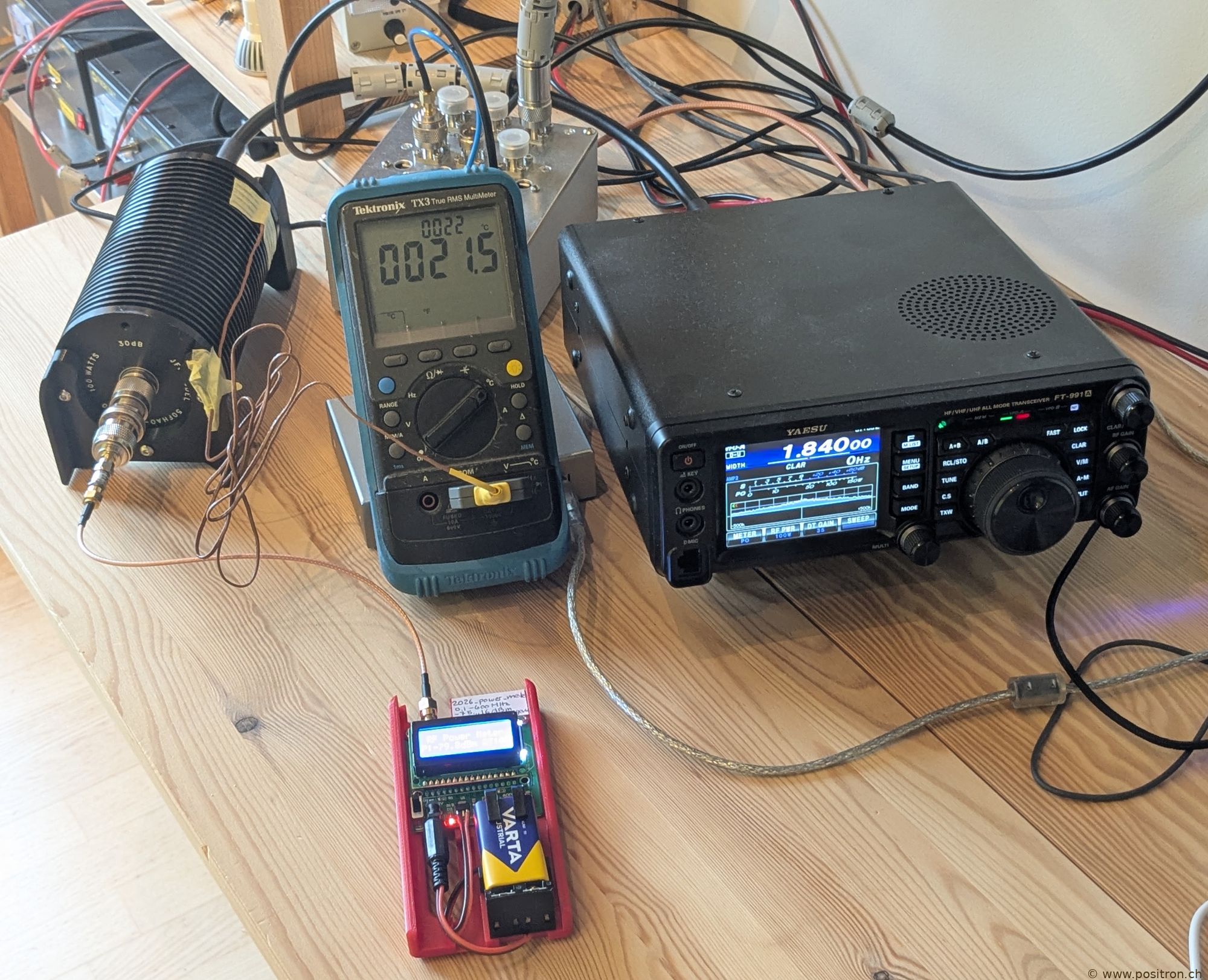
| FT-991A with connected attenuators and power meter A. | 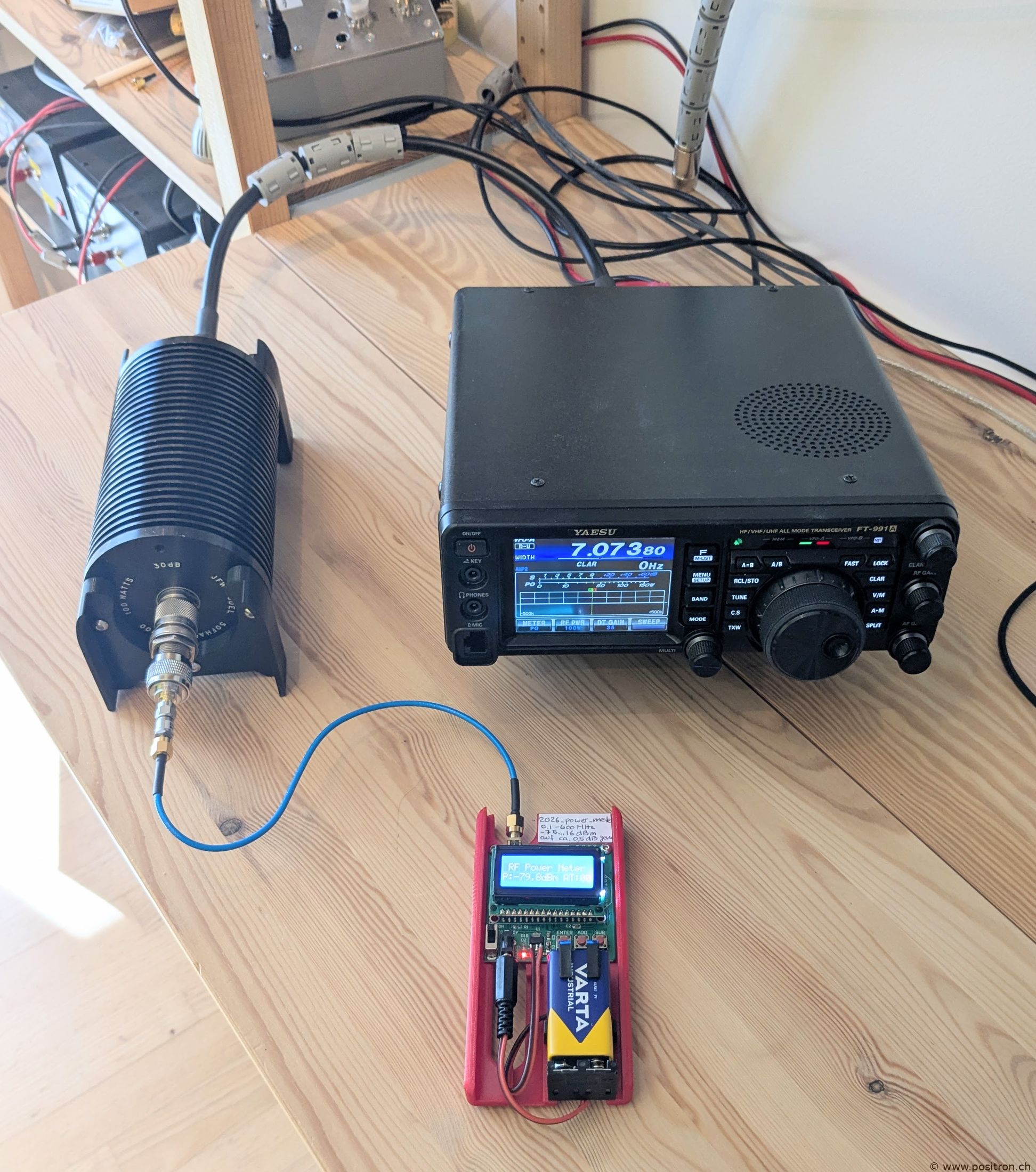 |
 |
|
| Example test at 432 MHz with 50 W target power. SWR clean at 1.0 | 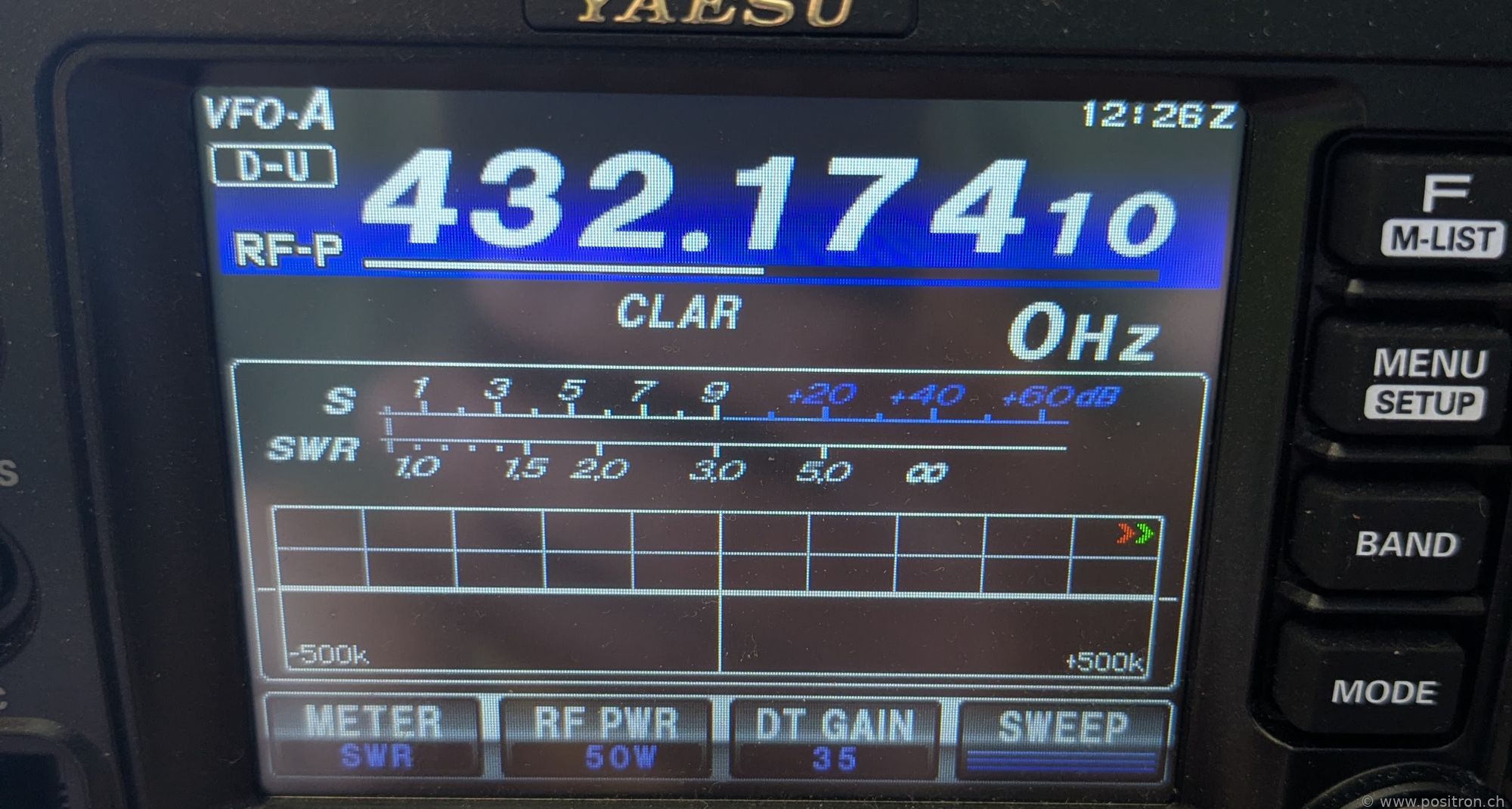 |
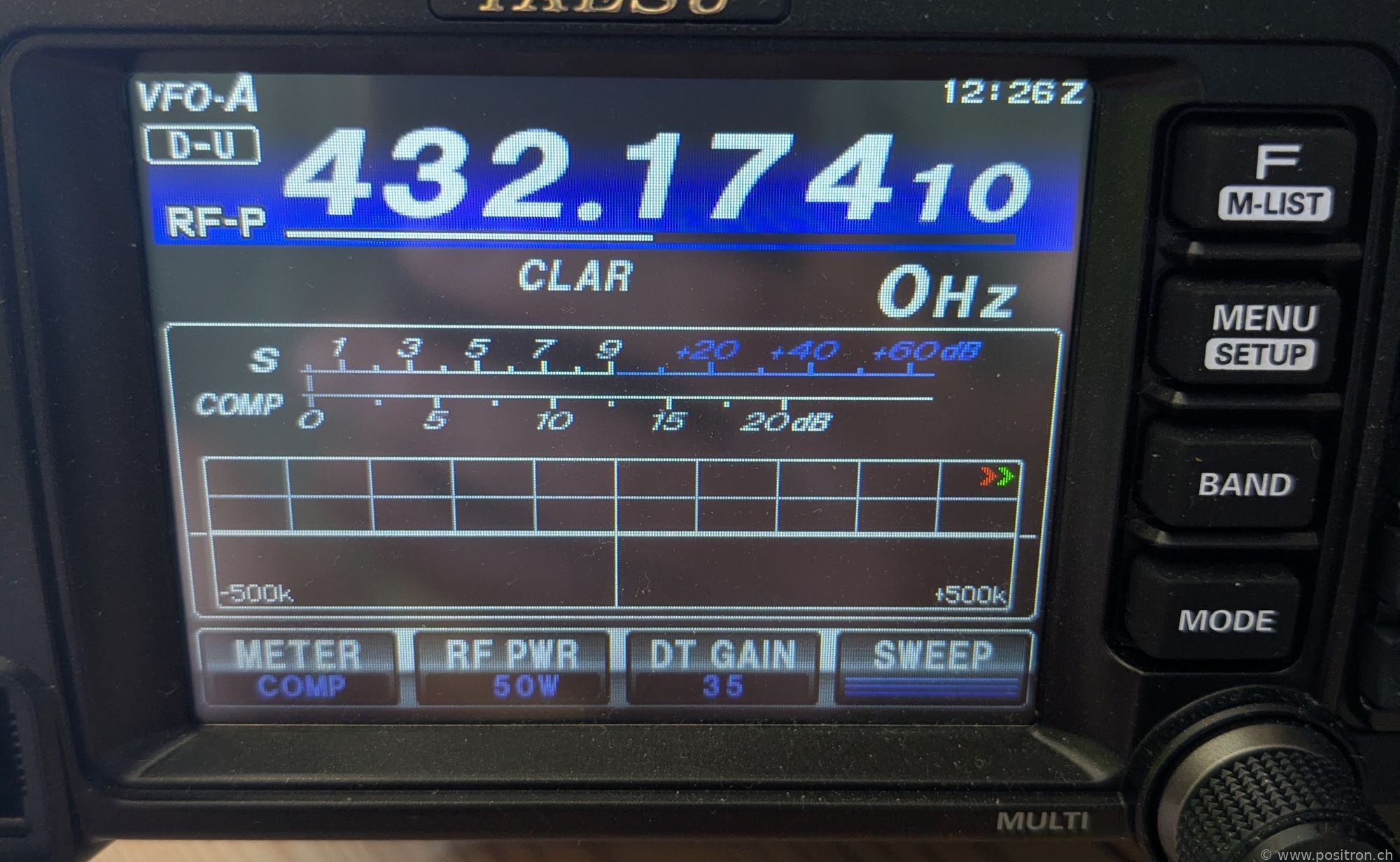 |
|
| VDD 12.3 V? Dear Yaesu developers, this scale is anything but easy to read. One tick mark per volt on the lower scale would not be a big luxury. Where I see 13.8 V labeled, it looks more like 13 V if I use the tick marks of the upper S-meter scale. A direct measurement with a multimeter at the power connector of the transceiver reads 12.93 V. | 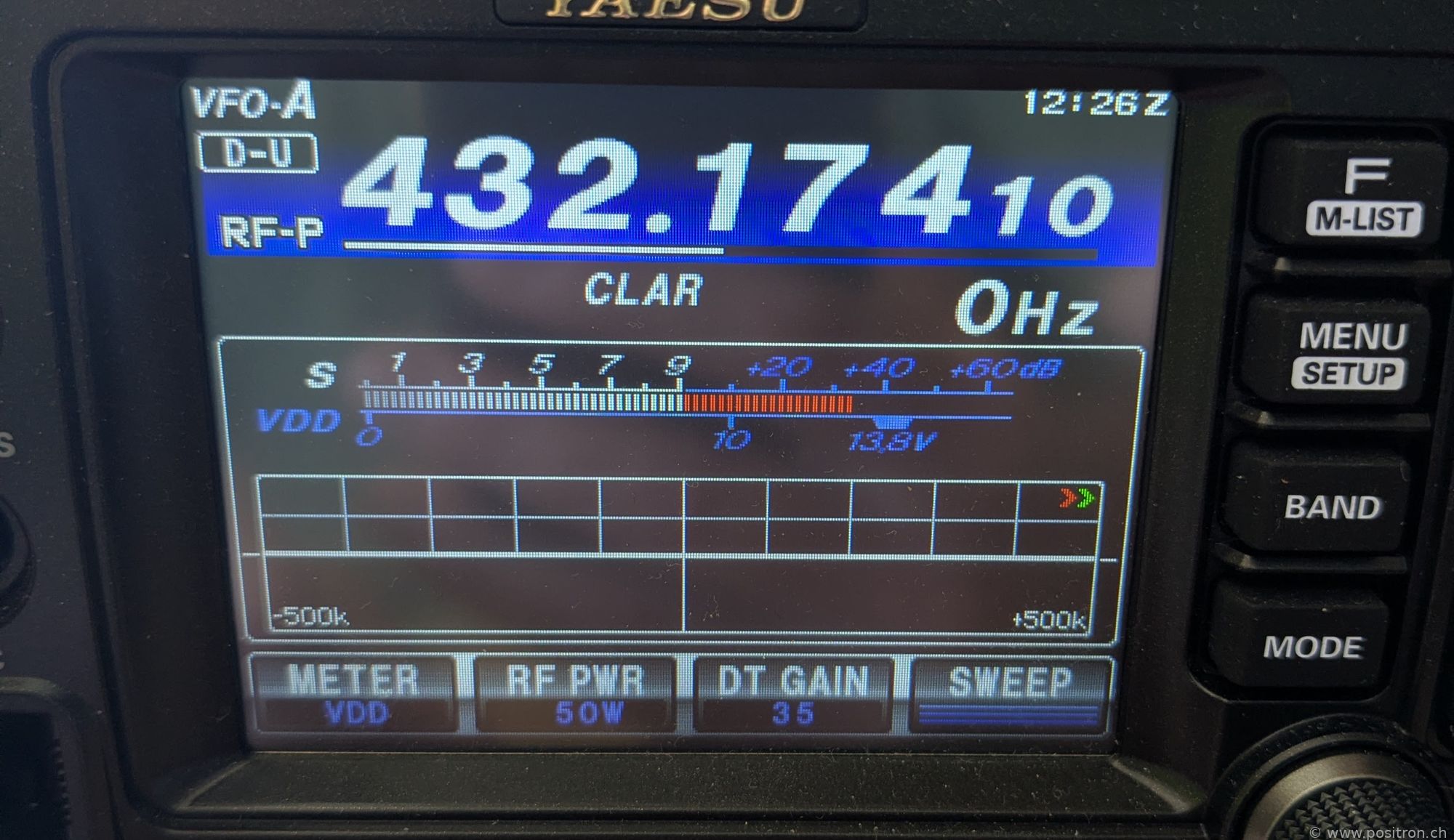 |
| IDD at 9.5 A is very low. According to the datasheet, I would expect about 15 A here. | 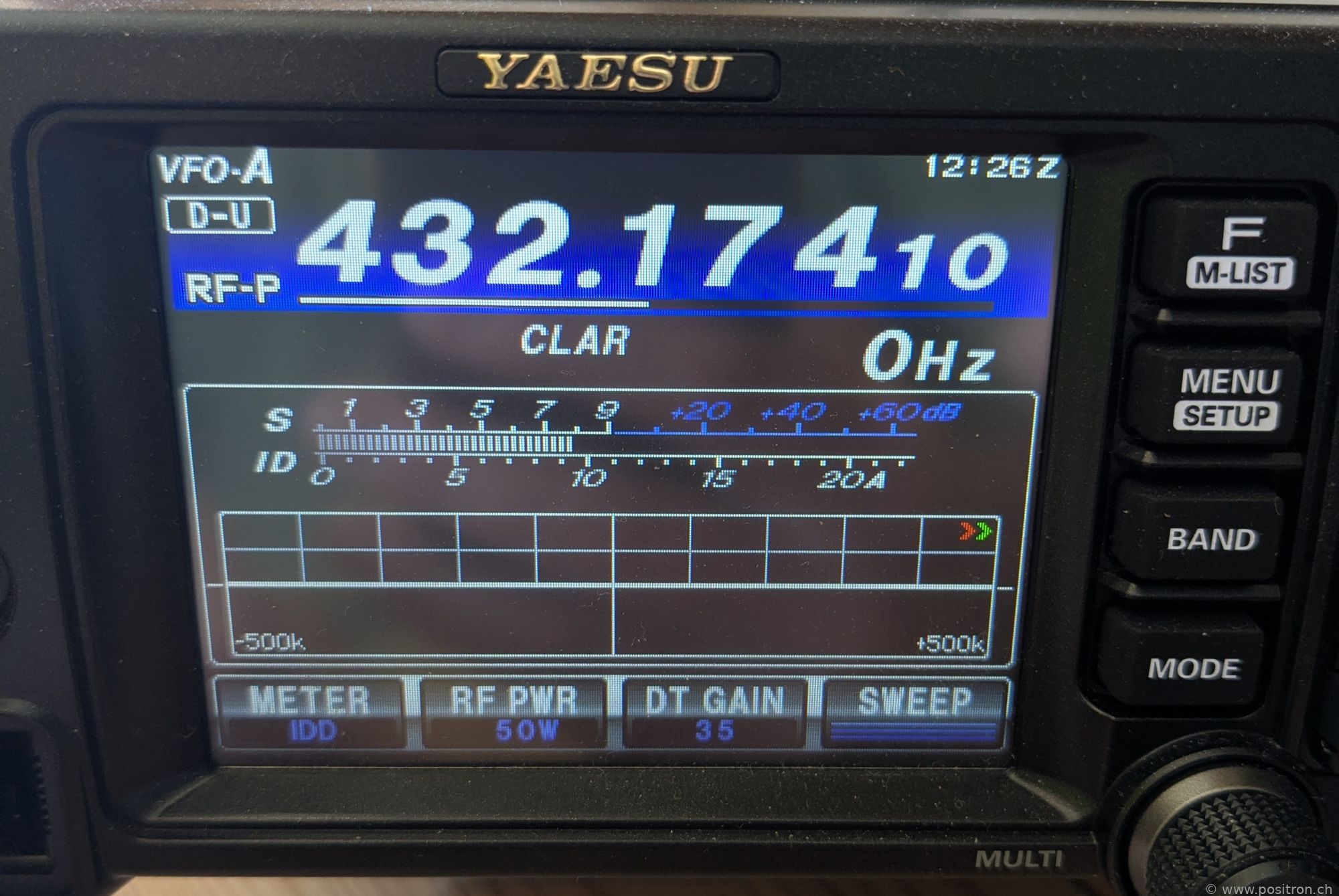 |
| From the manual (FT-991A_OM_ENG_EH067M205_2111A-KS-1_manual) I read: 13.8 V ± 15% : 11.73 V to 15.87 V. The 12.3 V I read would therefore still be well within the allowed range. | 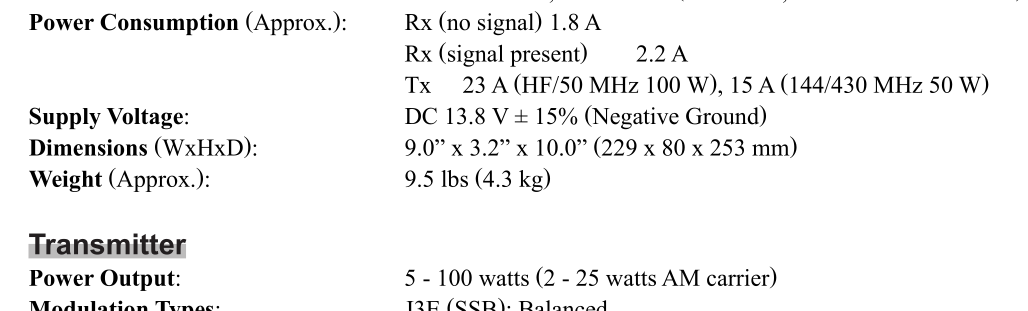 |
| The display shows a transmit power of 50 W. If my audio drive were too low, or the supply voltage too low, the displayed transmit power would also be lower. | 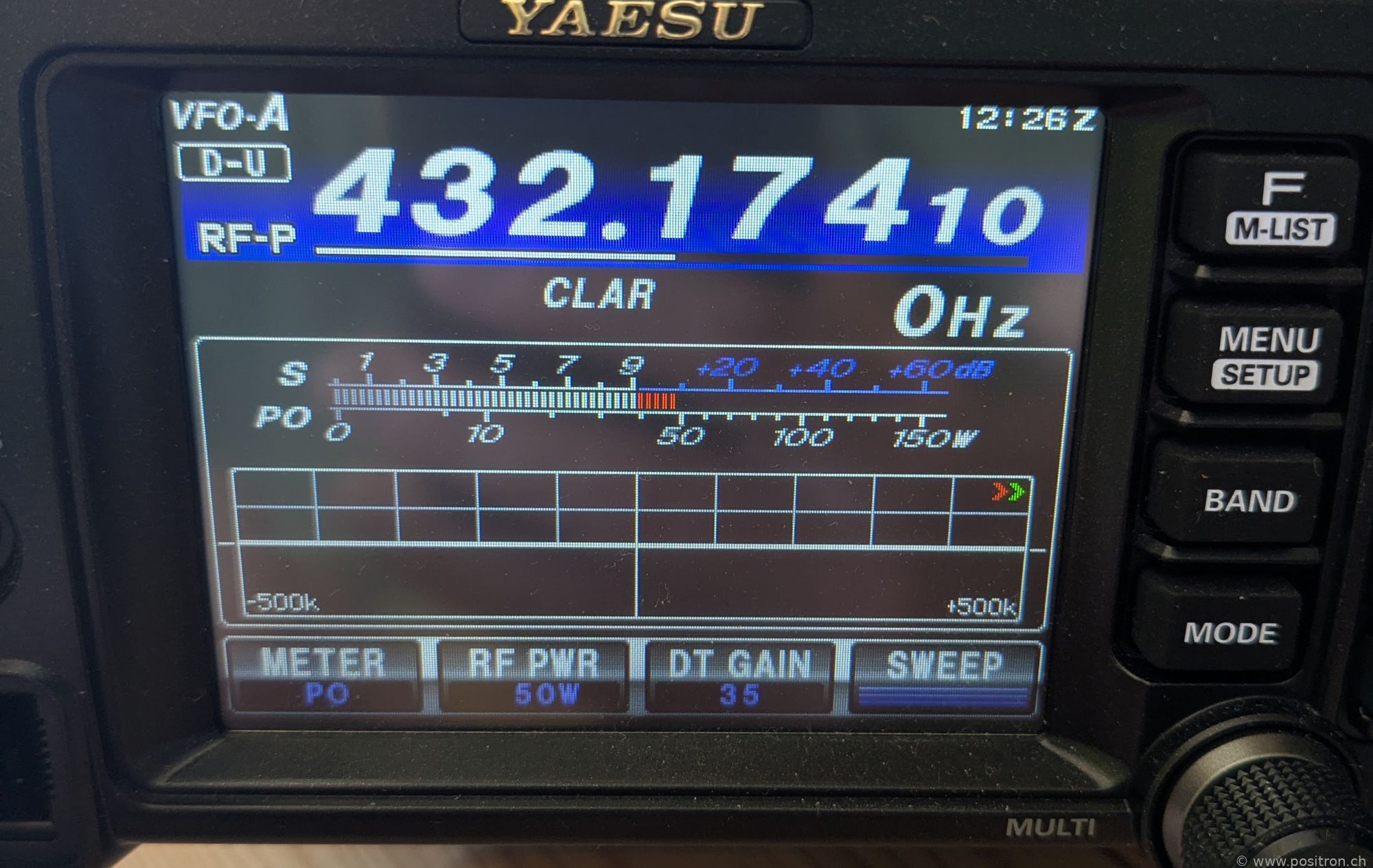 |
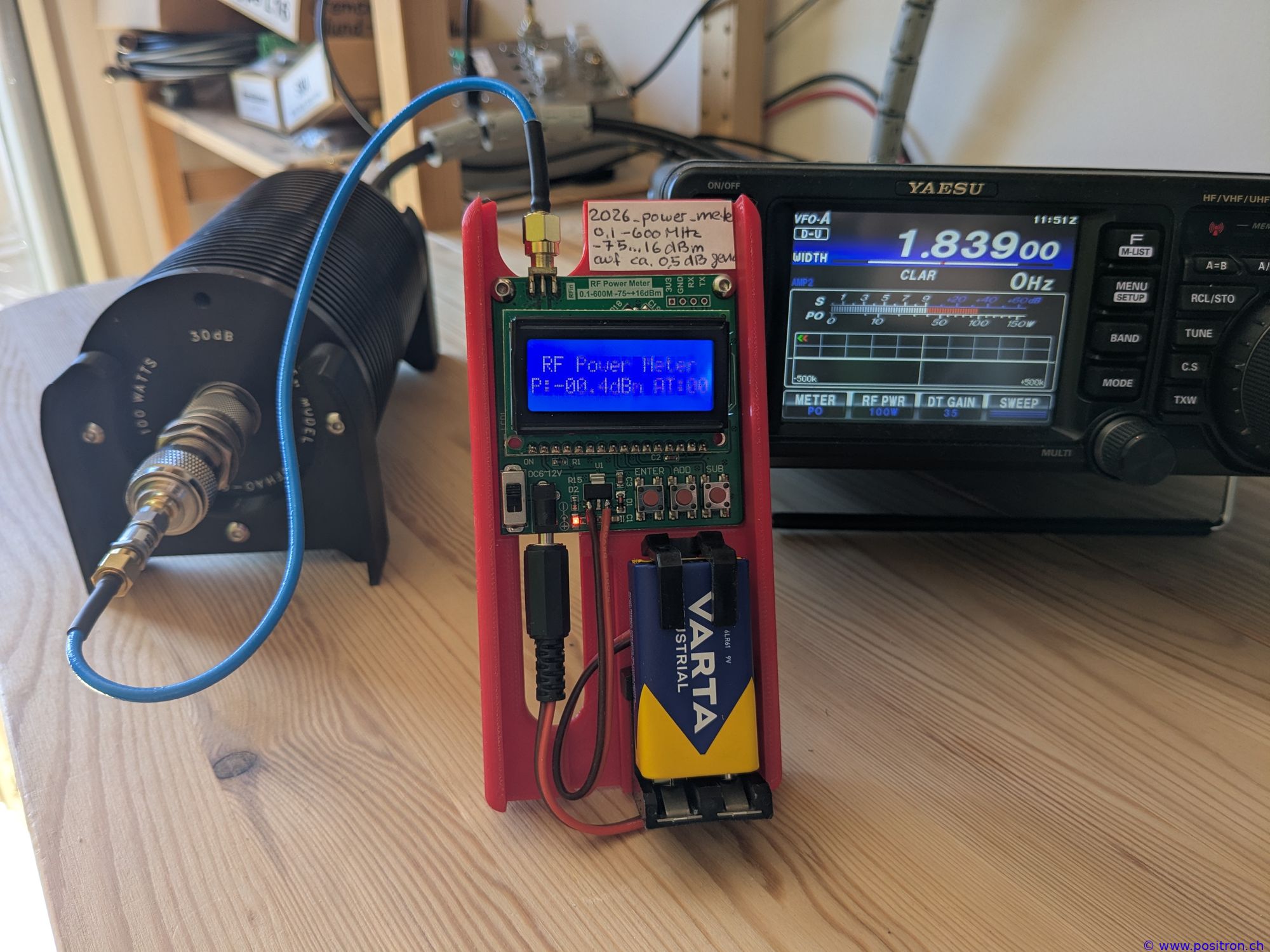
For the measurement I use WSJT-X in tune mode and observe that the AGC slightly deflects. I adjust "RF PWR" on the transmitter. For a few measurements, I switched to FM and transmitted using the hand microphone as a cross-check. The power was the same.
I measured the voltage directly at the connector of the FT-991A: at 432 MHz, 13.46 V idle and 12.93 V while transmitting. At the lower frequencies: 13.46 V idle and 12.76 V while transmitting.
The power can be selected from 5 W to 100 W in 1 W steps on the HF bands, and from 5 W to 50 W in 1 W steps on the higher bands.
I measured at several frequencies and at 5 different power levels.
| Frequency (MHz) | Set (W) | Measured (W) | Ratio | Power Meter |
|---|---|---|---|---|
| 1.8 | 100 | 91.2 | 91% | A |
| 1.8 | 50 | 45.7 | 91% | A |
| 1.8 | 25 | 20.9 | 84% | A |
| 1.8 | 10 | 9.1 | 91% | A |
| 1.8 | 5 | 4.6 | 91% | A |
| 3.6 | 100 | 95.5 | 95% | A |
| 3.6 | 50 | 46.8 | 94% | A |
| 3.6 | 25 | 22.4 | 90% | A |
| 3.6 | 10 | 9.3 | 93% | A |
| 3.6 | 5 | 4.8 | 96% | A |
| 7.1 | 100 | 87.1 | 87% | A |
| 7.1 | 50 | 42.7 | 85% | A |
| 7.1 | 25 | 20.4 | 82% | A |
| 7.1 | 10 | 8.5 | 85% | A |
| 7.1 | 5 | 4.5 | 89% | A |
| 10 | 100 | 87.1 | 87% | A |
| 10 | 50 | 45.7 | 91% | A |
| 10 | 25 | 20.9 | 84% | A |
| 10 | 10 | 8.9 | 89% | A |
| 10 | 5 | 4.8 | 96% | A |
| 14 | 100 | 81.3 | 81% | A |
| 14 | 50 | 43.7 | 87% | A |
| 14 | 25 | 20.9 | 84% | A |
| 14 | 10 | 8.5 | 85% | A |
| 14 | 5 | 4.8 | 96% | A |
| 28 | 100 | 81.3 | 81% | A |
| 28 | 50 | 42.7 | 85% | A |
| 28 | 25 | 20.0 | 80% | A |
| 28 | 10 | 8.5 | 85% | A |
| 28 | 5 | 4.8 | 96% | A |
| 50 | 100 | 89.1 | 89% | B |
| 144 | 50 | 60.3 | 121% | B |
| 432 | 50 | 61.7 | 123% | B |
| As an alternative measurement method without a power meter, I also measure the heating of the 30 dB attenuator after 90 s of transmission. | 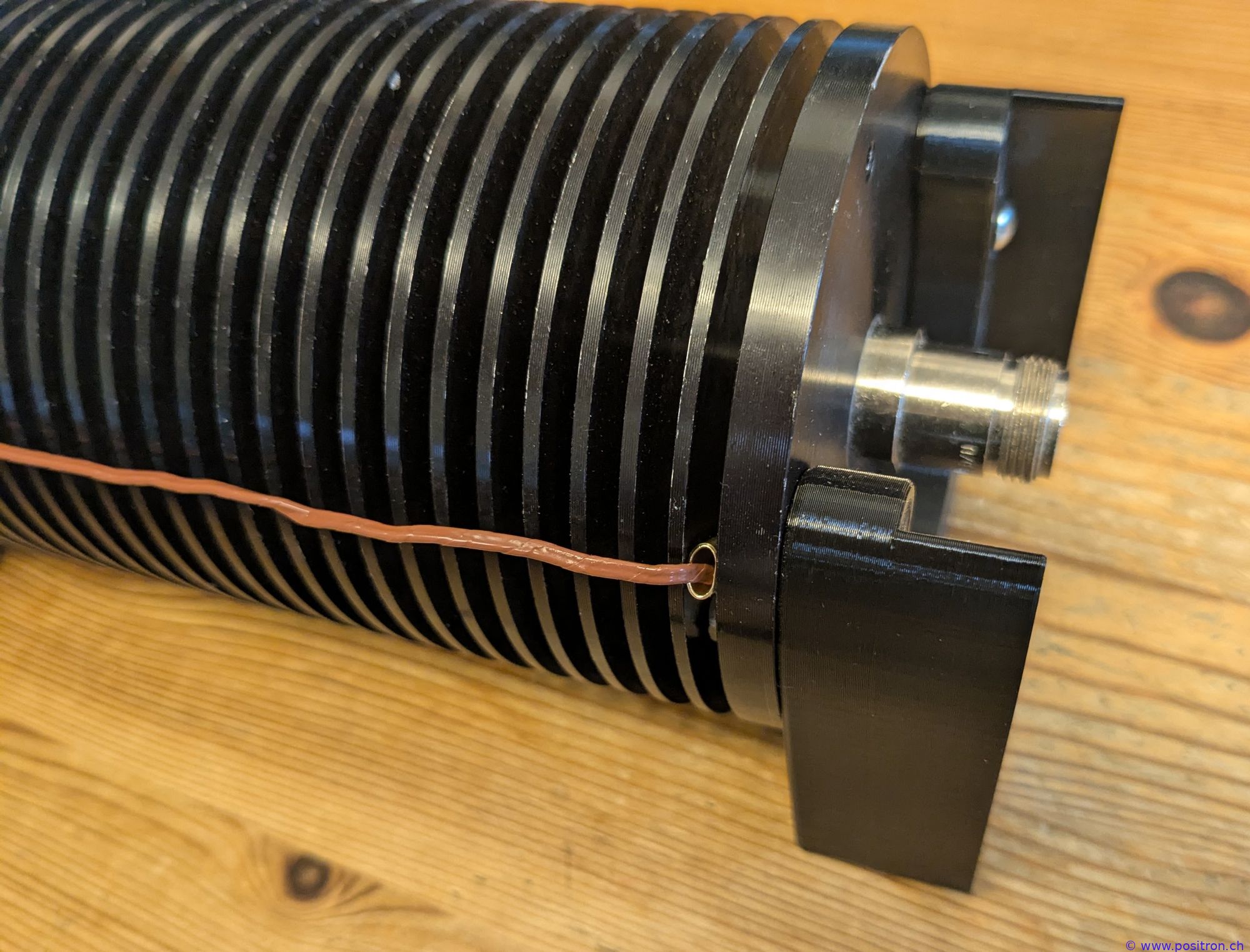 |
|
1.8 MHz 100W heating 18.6°C 432 MHz 50W heating 10°C Yes, the ratio of the heating matches quite nicely with the ratio of the expected power. |
 |
The transmit power appears to match the specifications very nicely.