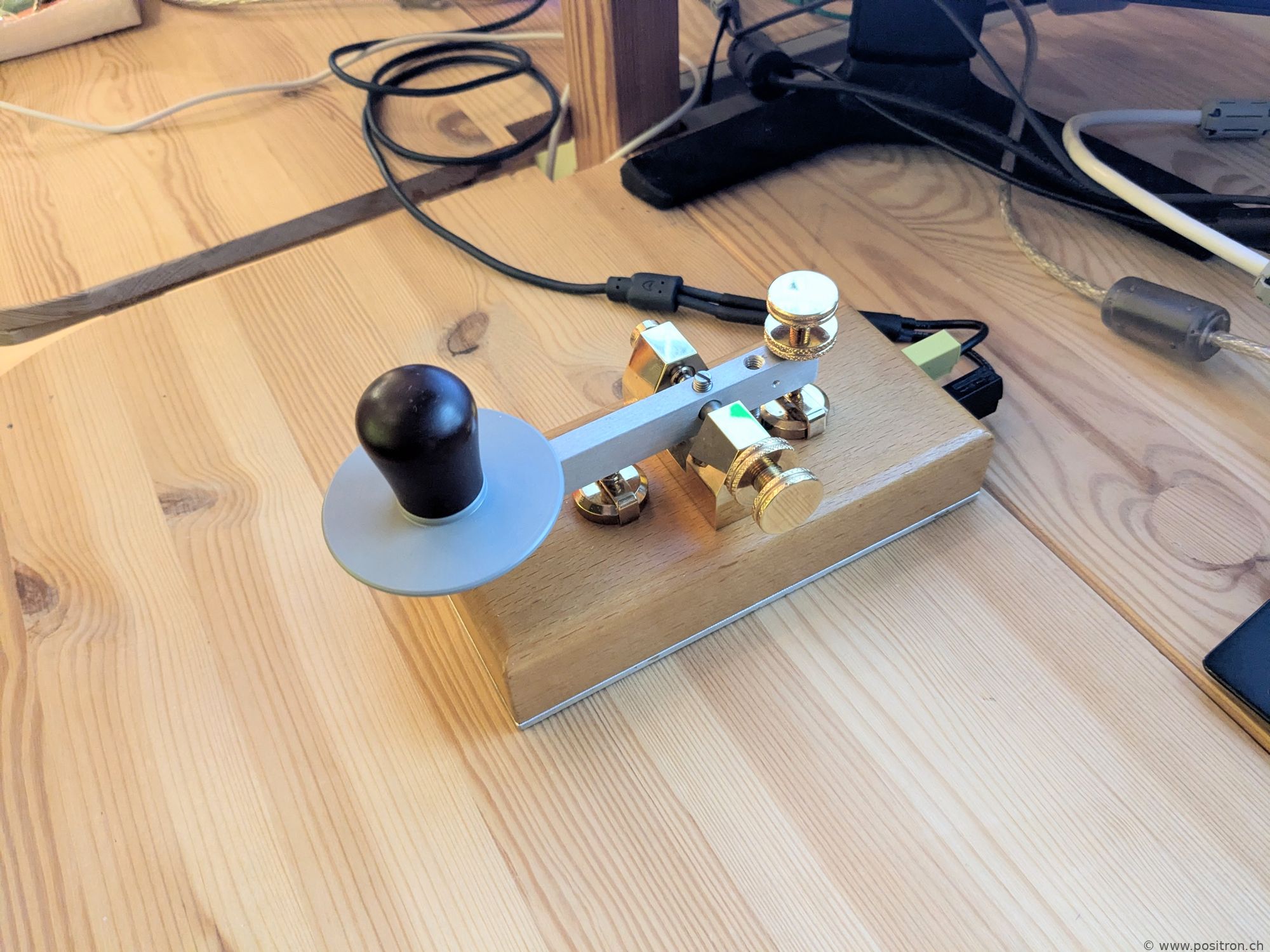
Wood: beech from a bed frame: 150 mm × 70 mm.
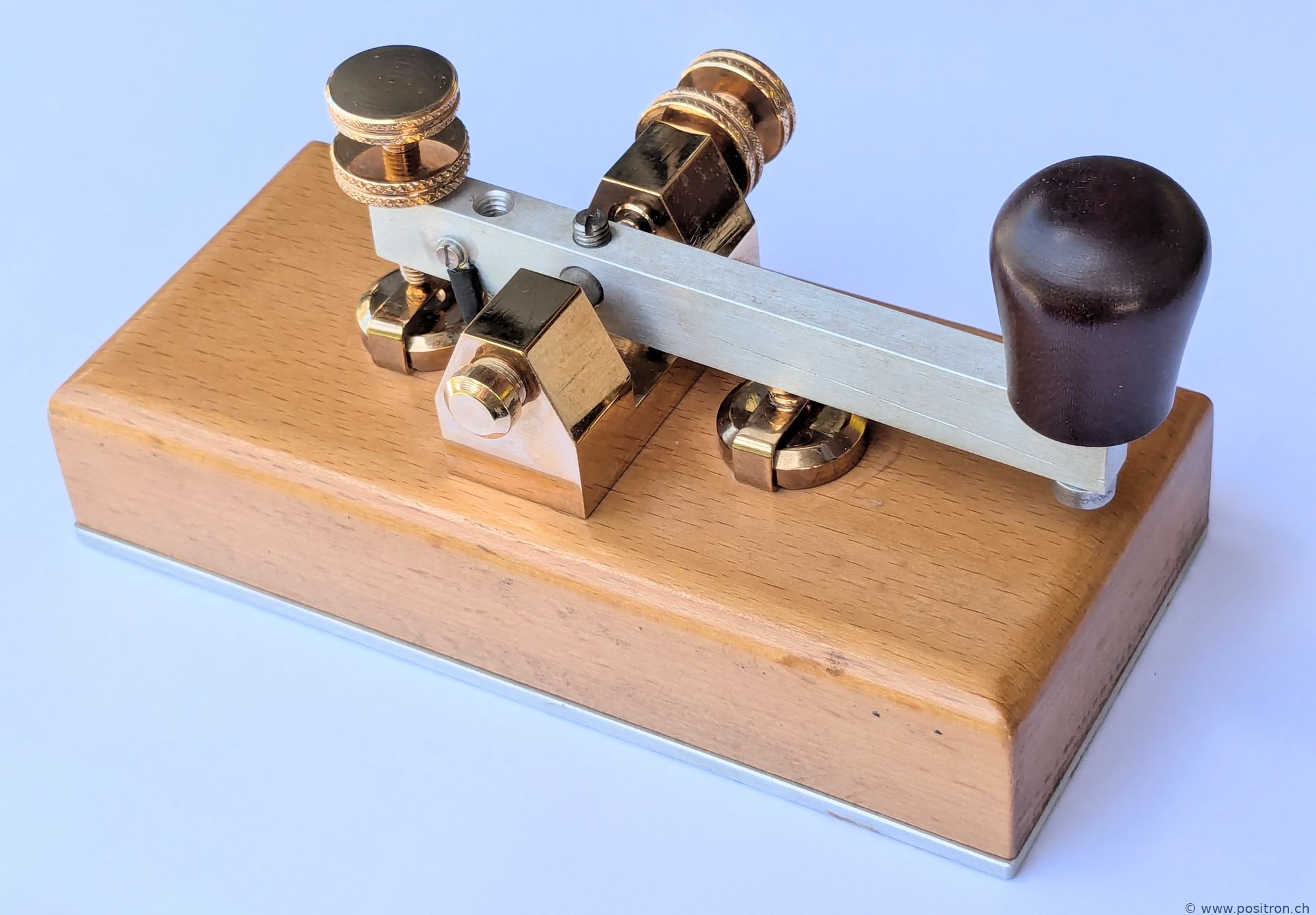
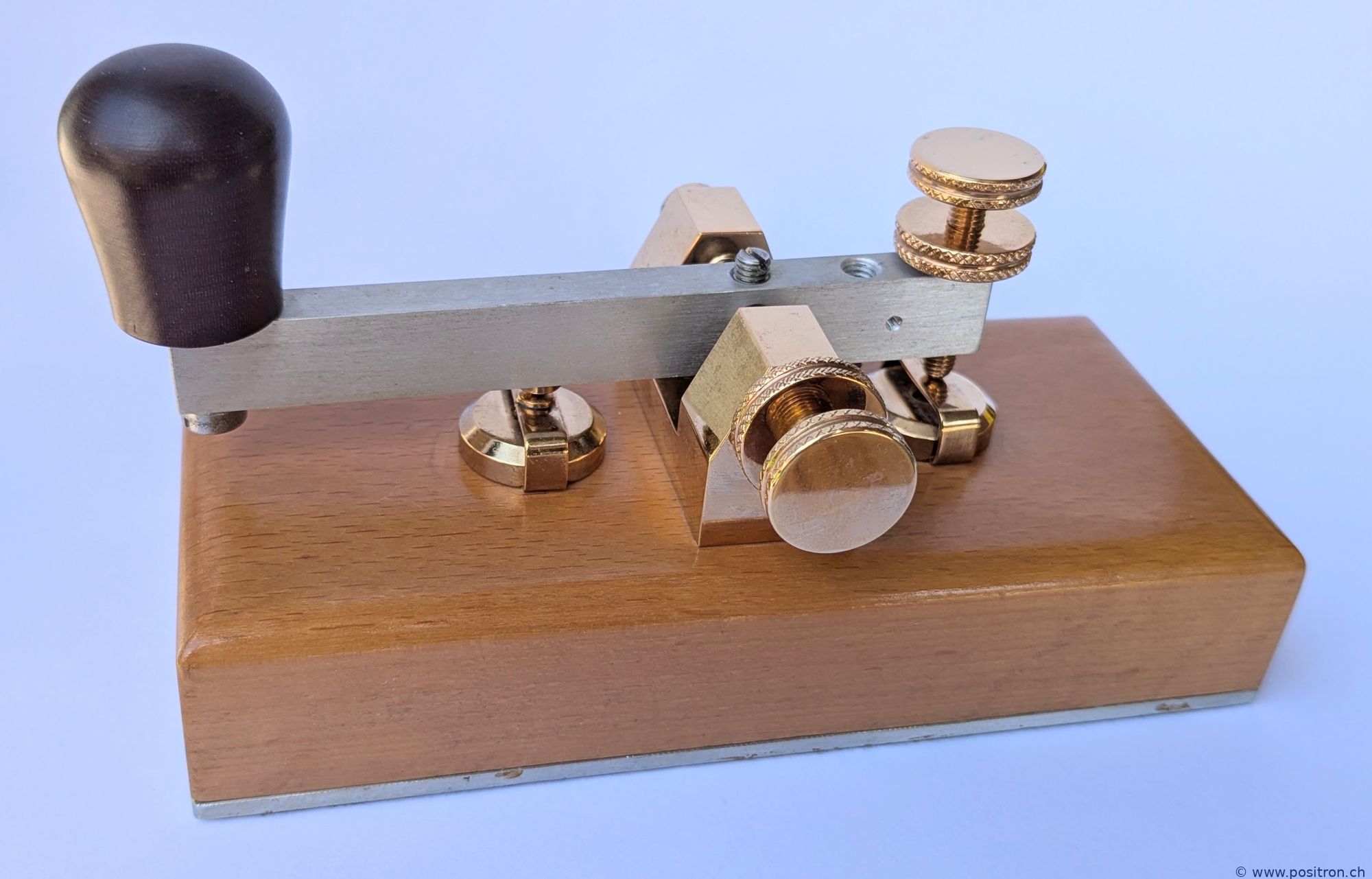
Total weight 720 g — quite substantial.
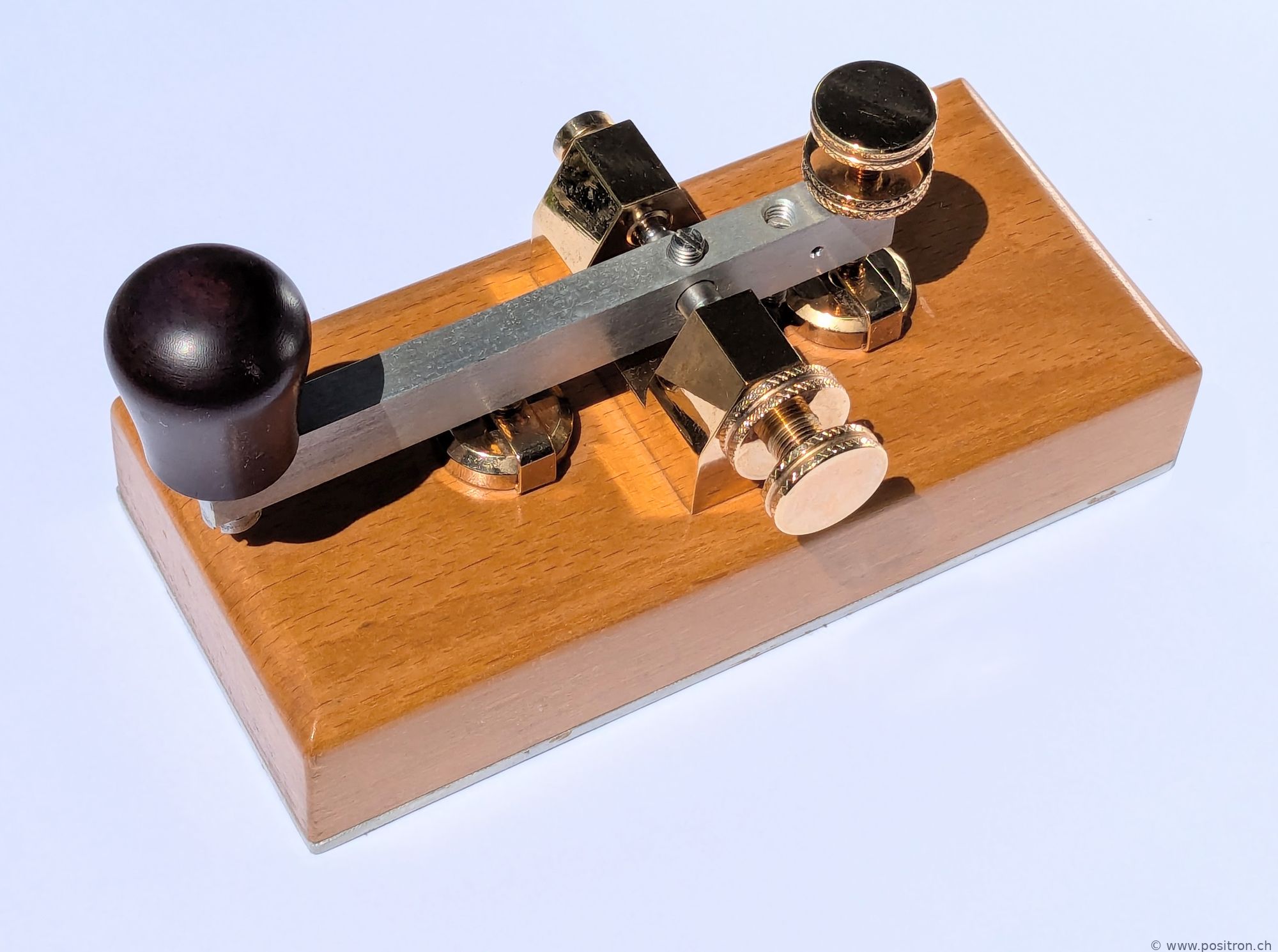
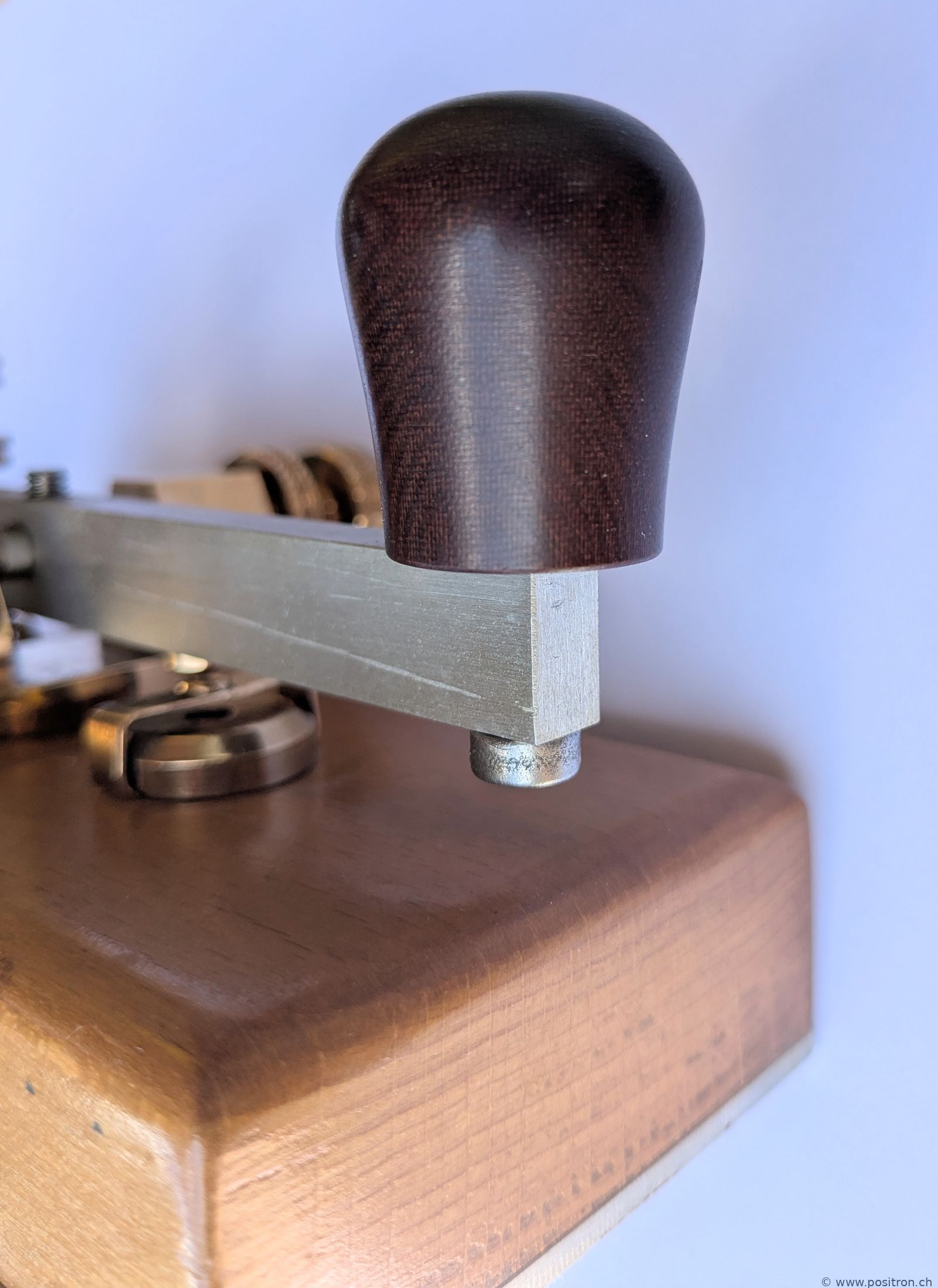
Knob: cotton fabric reinforced phenolic resin. It smells strongly when turned on the lathe.
Parts made of brass, from brass offcuts I could get for free. The brass parts were nickel-plated and then gold-plated by the company “Werner Flühmann AG, Galvanik mit Edelmetallen, Dübendorf”. As far as I know, this company no longer exists. That was very expensive for me at the time.
After gold-plating, the M8 fine thread and all the other threads seized and I had to re-cut them. They probably applied the coating far too thick.
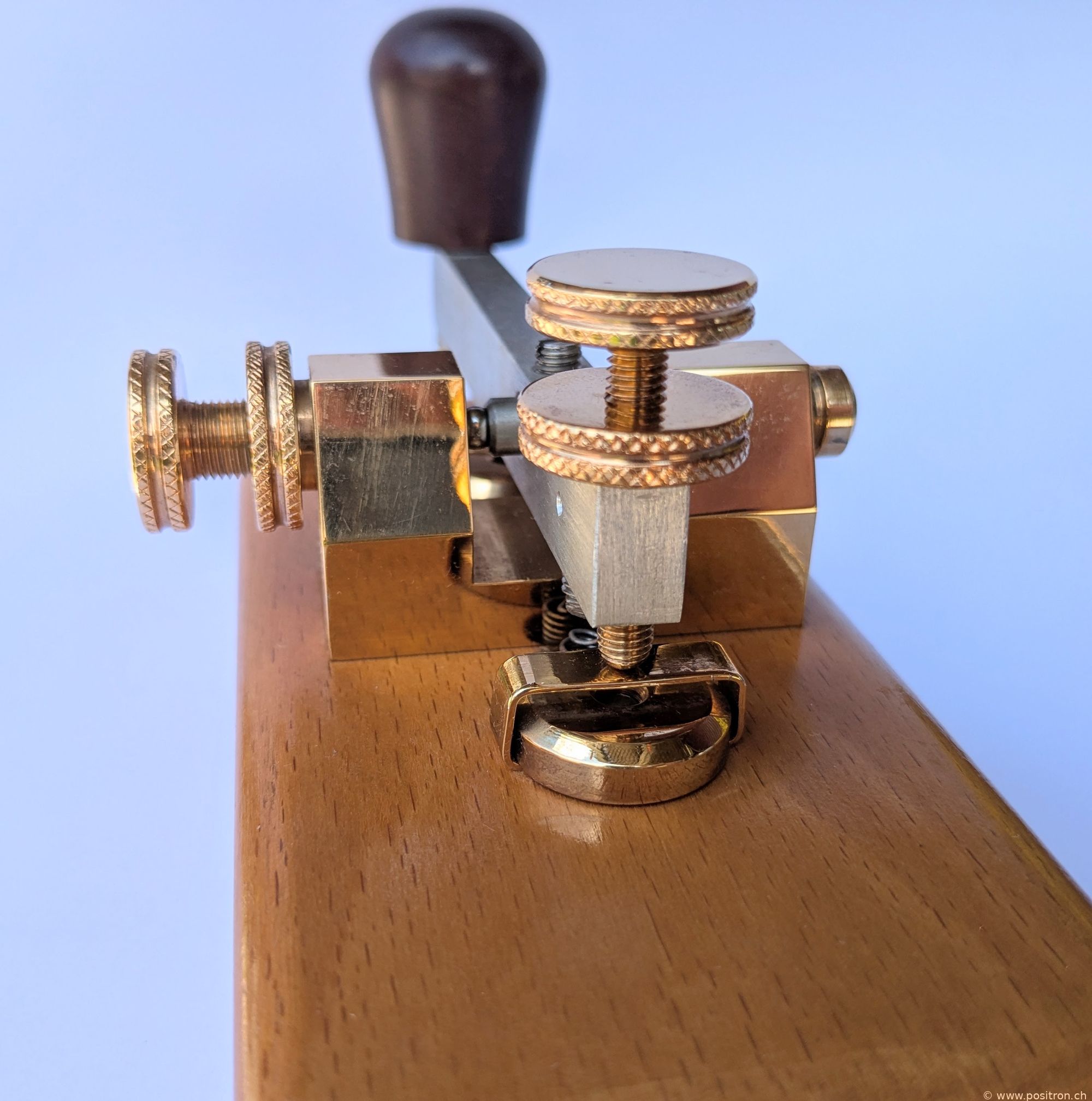
Lever: aluminium.
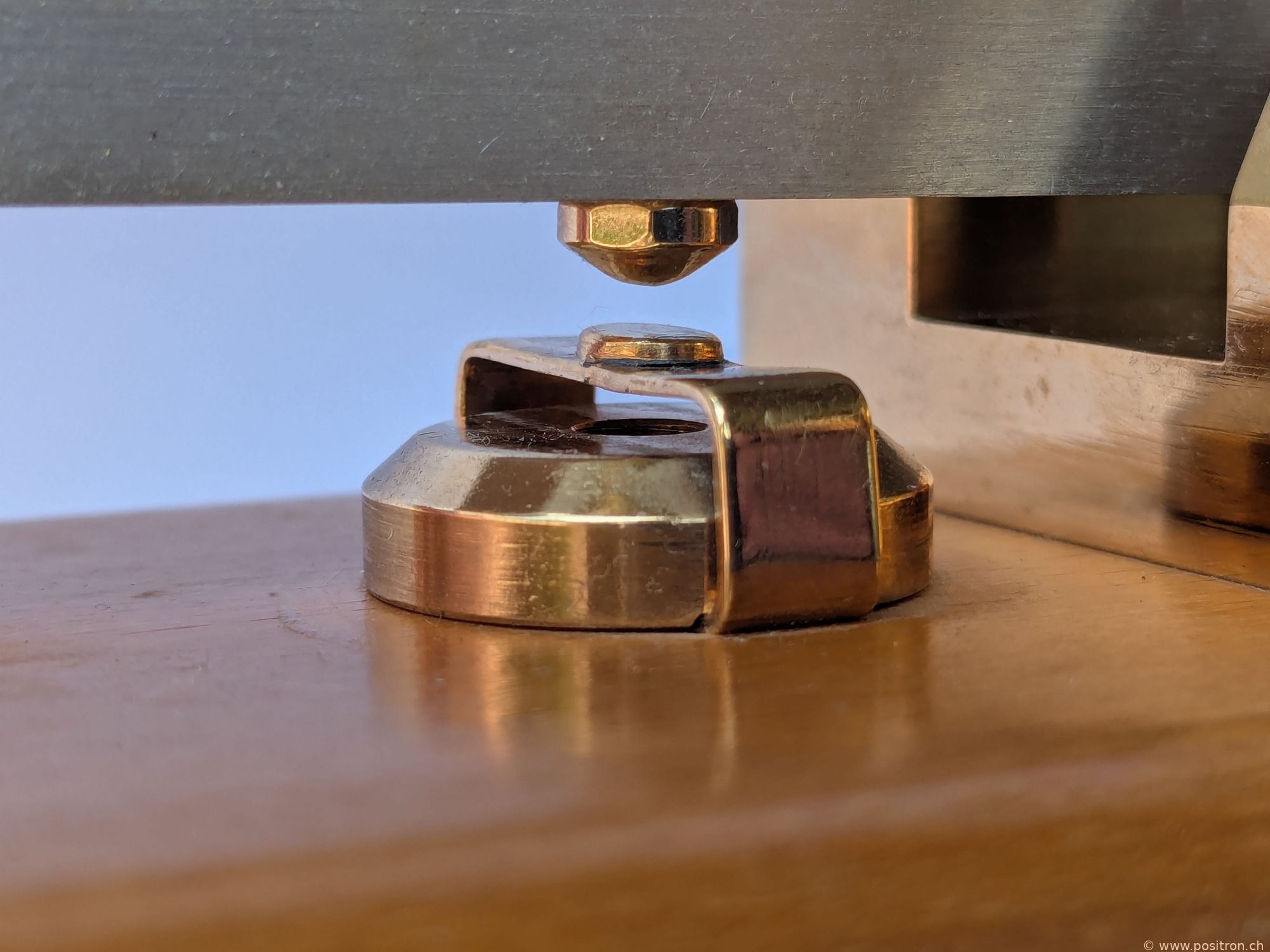
Contacts: taken from a heavy-duty 220 V relay, full silver, then gold-plated together with the brass parts.
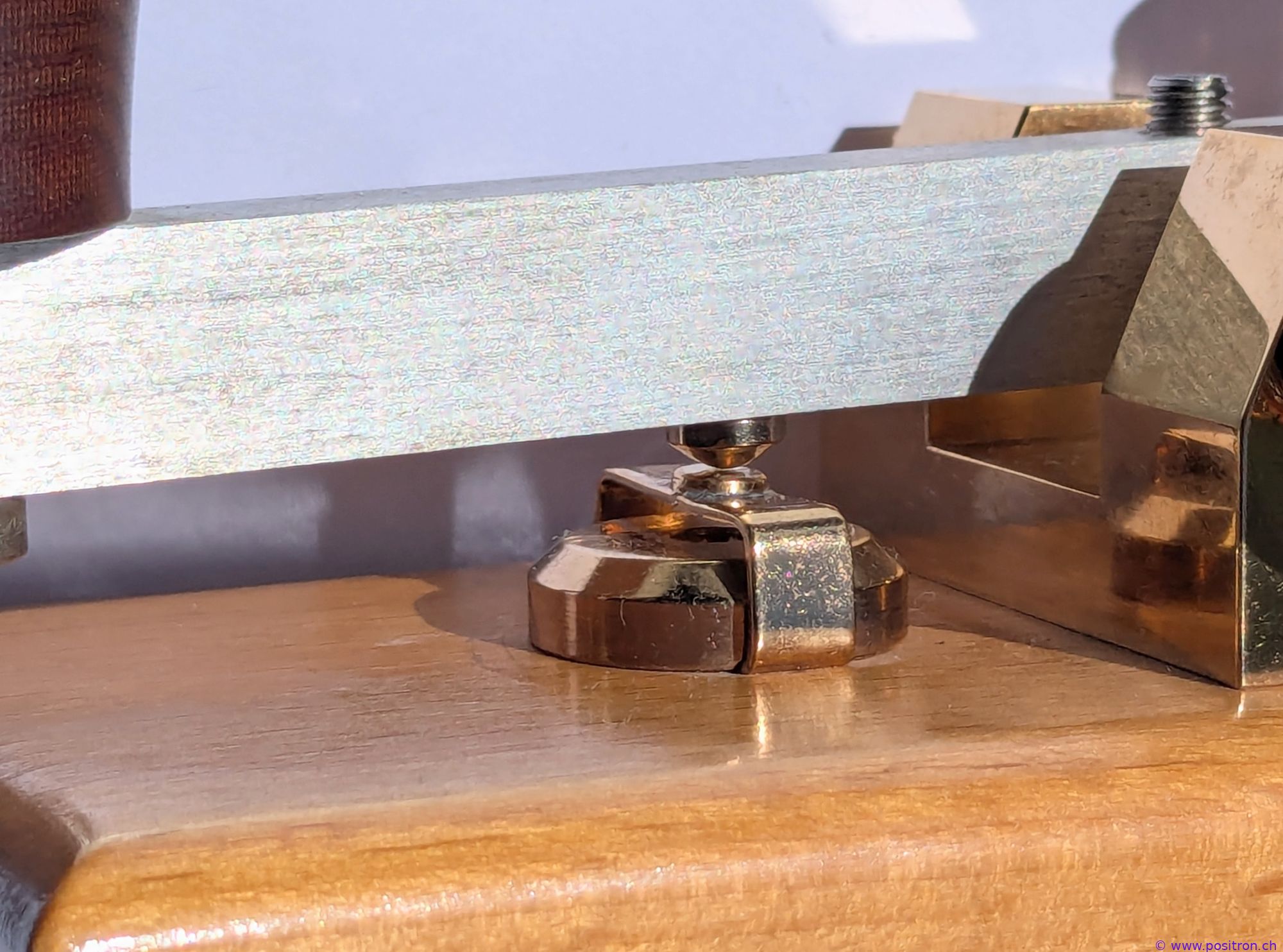
The gap was set extra wide for the photo so that the contacts are clearly visible.
In 2026 I added the black wire to ensure the lever has a reliable connection to ground (M2 screw, thick heat-shrink tubing and fine silicone wire routed through the same hole as the spring). The contact via the side steel balls felt too unreliable to me.
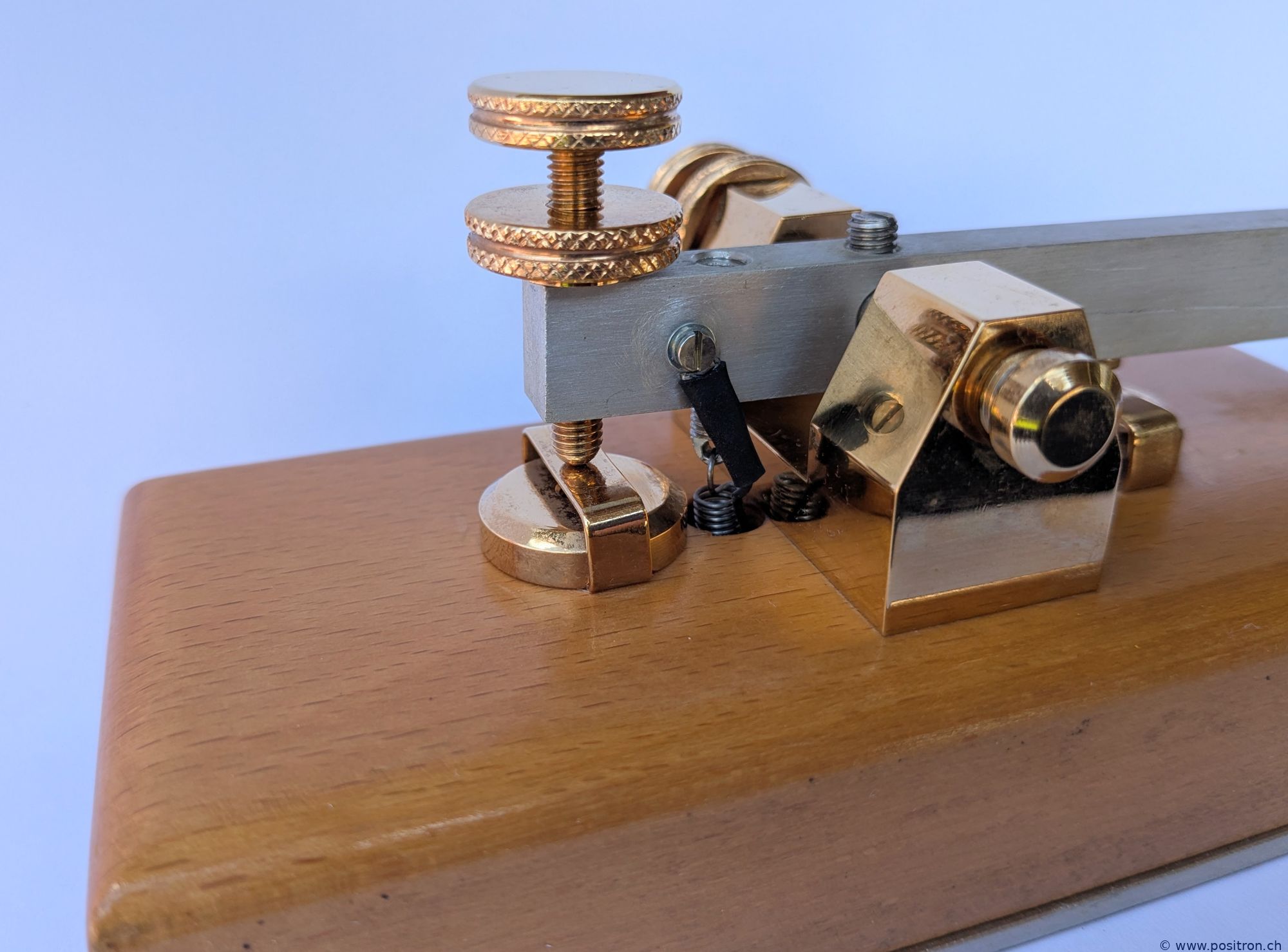
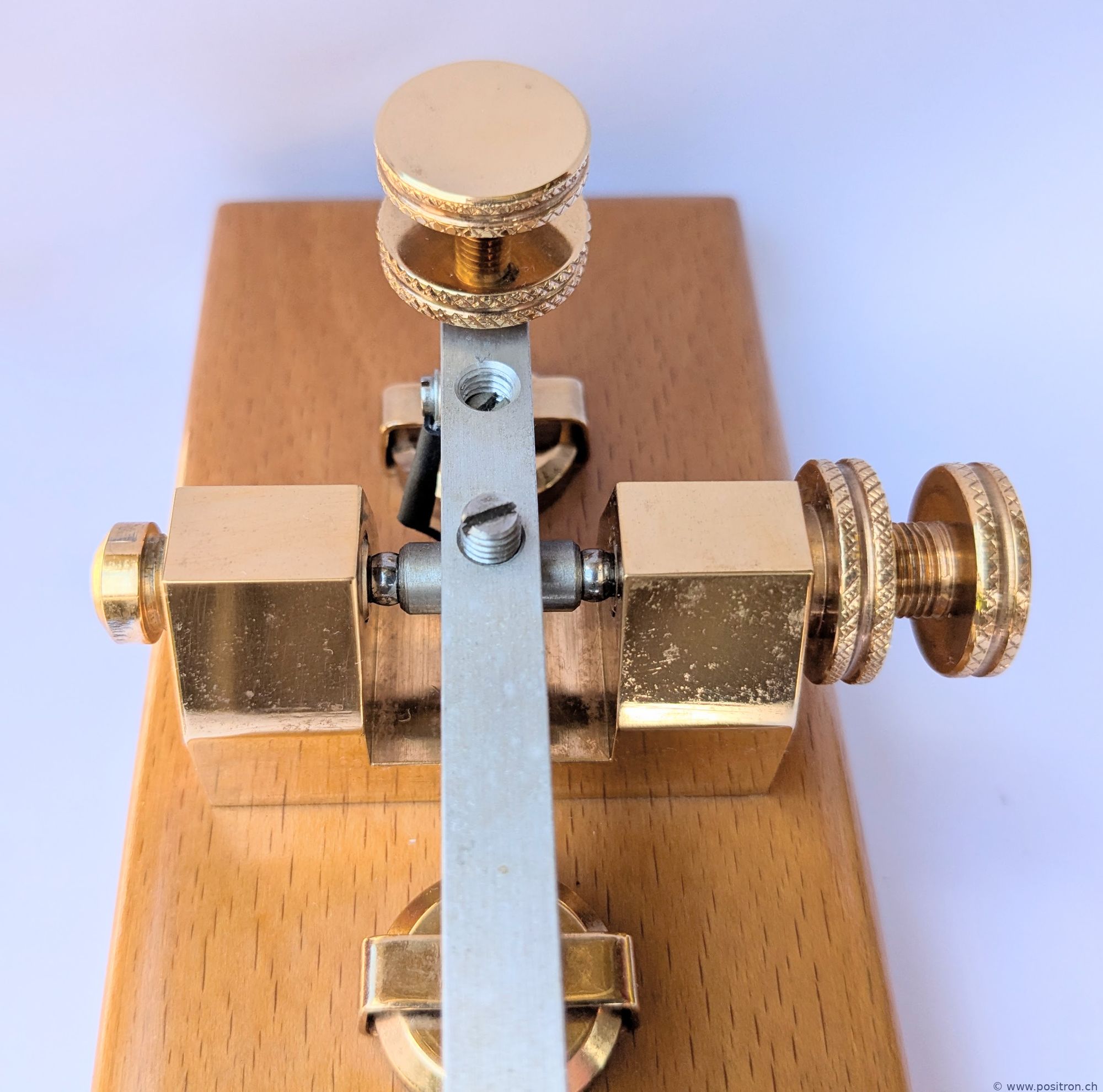
Back then, this was the pinnacle of my mechanical understanding — two polished balls as bearings.
One could call it a ball bearing, but it is not one in the sense that the balls actually roll. Today I would use small precision ball bearings. Bearings that small either did not exist back then or were very expensive.
Luckily I still had some old audio cables lying around that I could reuse for the Morse key.
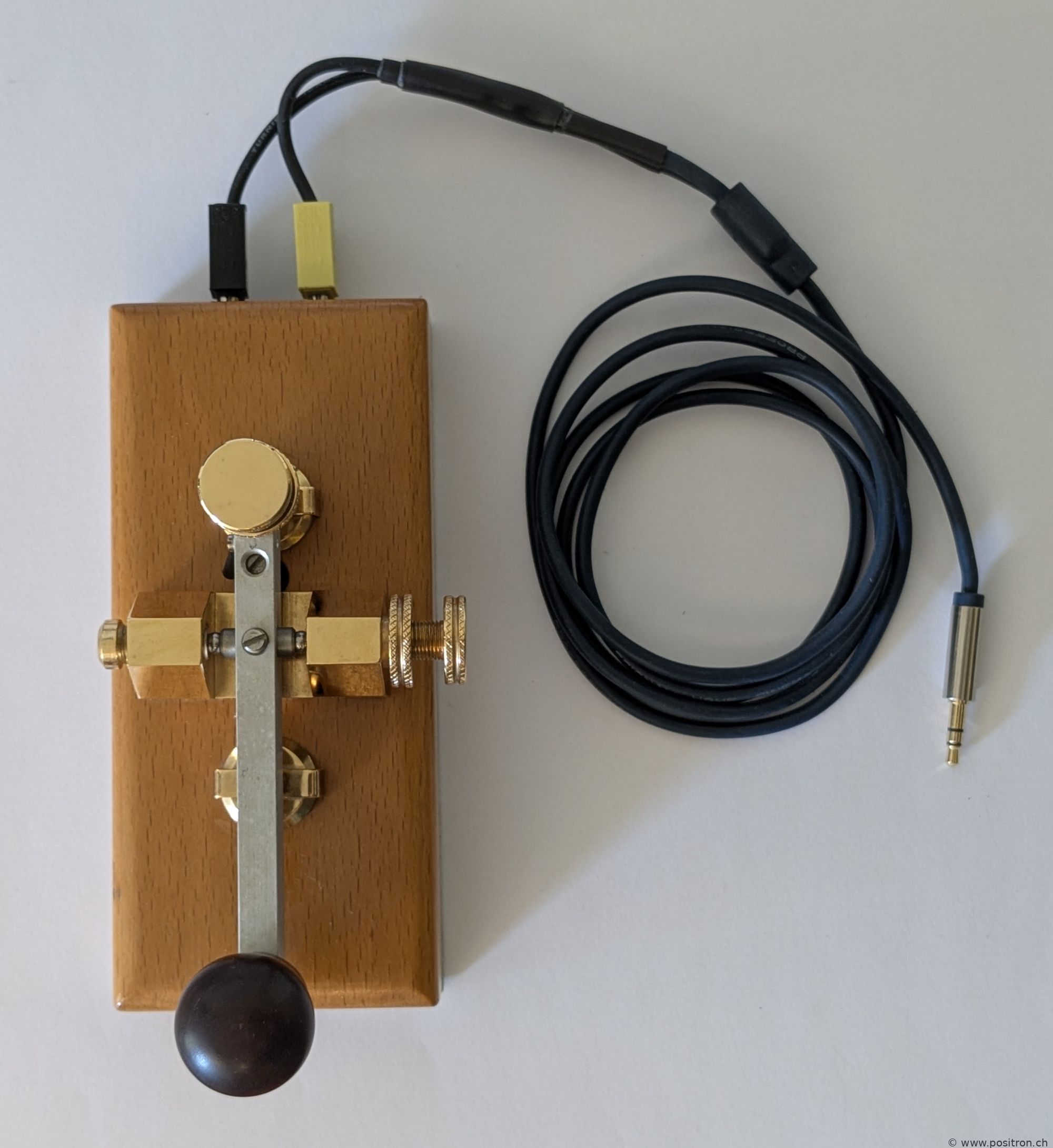
Below the knob I also made a disc, so the hand tires less.